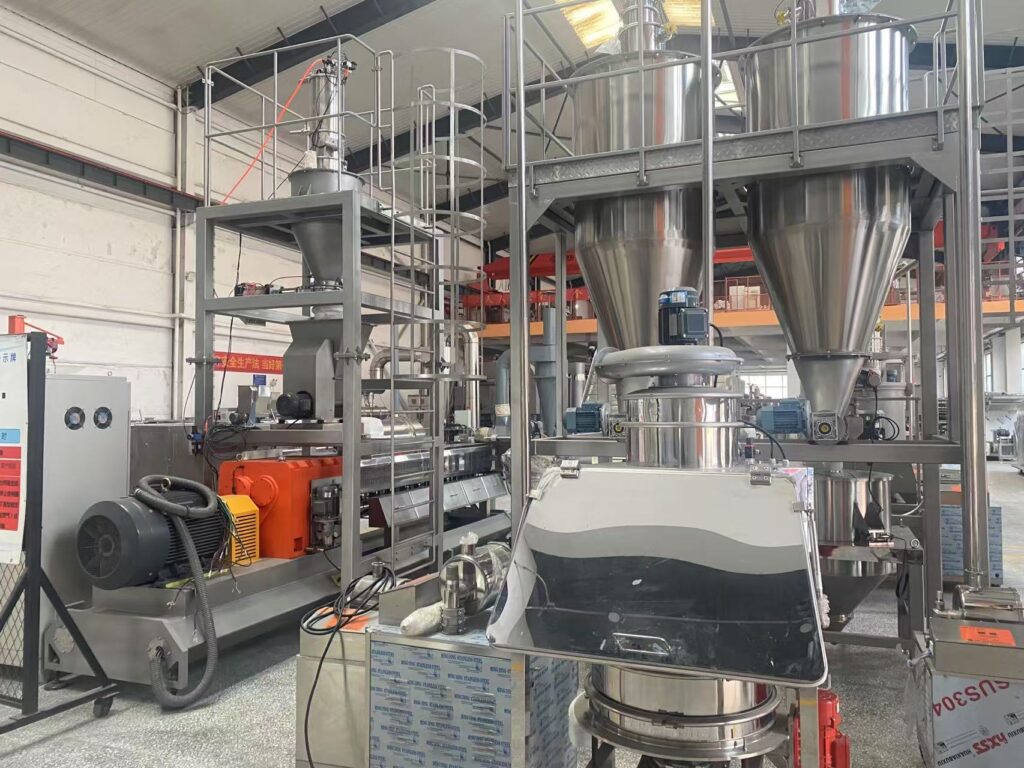
In the food and feed processing industry, extruders play a vital role in producing a wide range of puffed snacks, breakfast cereals, pet foods, and aquafeeds. double screw extruder During high-temperature and high-pressure extrusion, a significant amount of heat is generated. To maintain consistent product quality and protect equipment, an efficient water cooling system is indispensable.
Why Cooling is Necessary
Although extrusion relies heavily on heat to cook and expand raw materials, excessive temperatures can cause several problems:
- Burnt material inside the barrel, leading to off-flavors and discoloration
- Uneven expansion, resulting in inconsistent texture and shape
- Accelerated wear on screws and barrels due to thermal stress
- Blockages at the die, causing production interruptions
The water cooling system acts as a thermal regulator, keeping the barrel temperature within a precise range for optimal extrusion performance.
Main Components
A typical water cooling system in an extruder consists of:
- Cooling Jackets
These are hollow chambers surrounding the extruder barrel. Cooling water circulates through them to absorb excess heat from the material and mechanical friction. - Water Supply Unit
Usually includes a reservoir, pump, and flow control valves. Softened or treated water is preferred to prevent scale buildup inside the jackets. - Temperature Sensors
Positioned along the barrel, thermocouples continuously monitor the actual temperature and send signals to the control system. - Control Valves
Solenoid or proportional valves regulate the flow of cooling water based on temperature feedback. - Control Panel (PLC/HMI)
Operators set target temperatures for different barrel zones. The system automatically opens or closes valves to maintain these set points.
How It Works
The cooling process is typically zone-controlled. An extruder barrel is divided into several independent temperature zones, each equipped with its own cooling jacket and sensor.
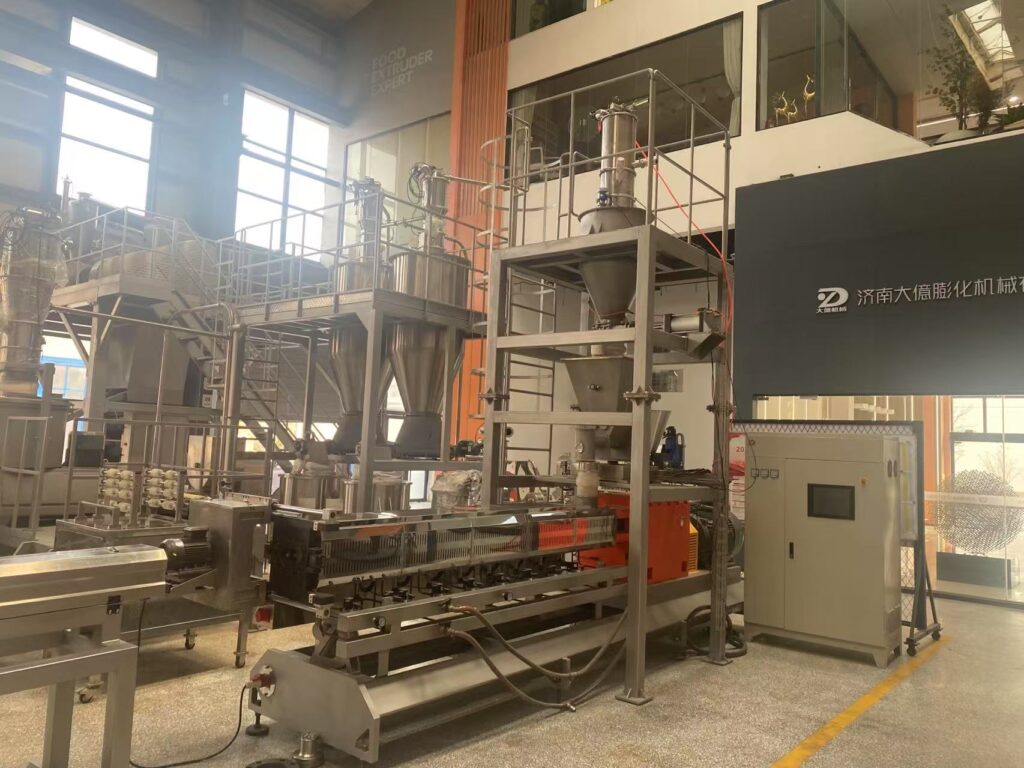
When a zone exceeds the set temperature, the controller activates the cooling valve. Cool water flows into the jacket, absorbs heat, and exits through a return line. double screw extruder Some systems recirculate the water through a heat exchanger or cooling tower, while others use a once-through configuration.
Once the temperature drops back to the desired range, the valve closes. This closed-loop feedback ensures stable and uniform thermal conditions.
Types of Cooling Systems
1. Direct Cooling
Water flows directly through the jackets and is discharged or recirculated. Simple and widely used in single-screw extruders.
2. Closed-Loop Recirculating System
Water circulates in a sealed loop and passes through an external cooling unit (e.g., chiller or evaporative cooling tower). More common in large-scale, continuous twin-screw extruders.
3. Spray Cooling
Water is sprayed onto the outer surface of the barrel. double screw extruder Less efficient but sometimes used in older or specialized designs.
Operational Tips
- Monitor water quality – Hard water causes scale, reducing heat transfer efficiency.
- Check for leaks – Even small leaks can lead to temperature fluctuations and safety hazards.
- Calibrate sensors regularly – Inaccurate readings may cause over-cooling or under-cooling.
- Adjust flow rates carefully – Too much cooling can “quench” the melt, affecting expansion and product texture.
Conclusion
The water cooling system is not merely an accessory—it is a core component of modern extrusion technology. By precisely controlling barrel temperatures, it ensures consistent product quality, protects equipment longevity, and enables the continuous operation required for high-volume production. As extrusion processes become more sophisticated, so too will the cooling technologies that support them.
 Belarusian
  English
  Russian
  Spanish
  Italian
  Arabic
  Portuguese
  German
  French
  Japanese
  Moroccan Arabic
  Persian