
Proper temperature control is critical for extrusion processes, affecting product quality, machine stability, and energy efficiency. snack extruder machine Overheating can lead to material degradation, dimensional inaccuracy, increased wear, and even equipment failure. This article outlines practical cooling methods to maintain optimal extruder performance.
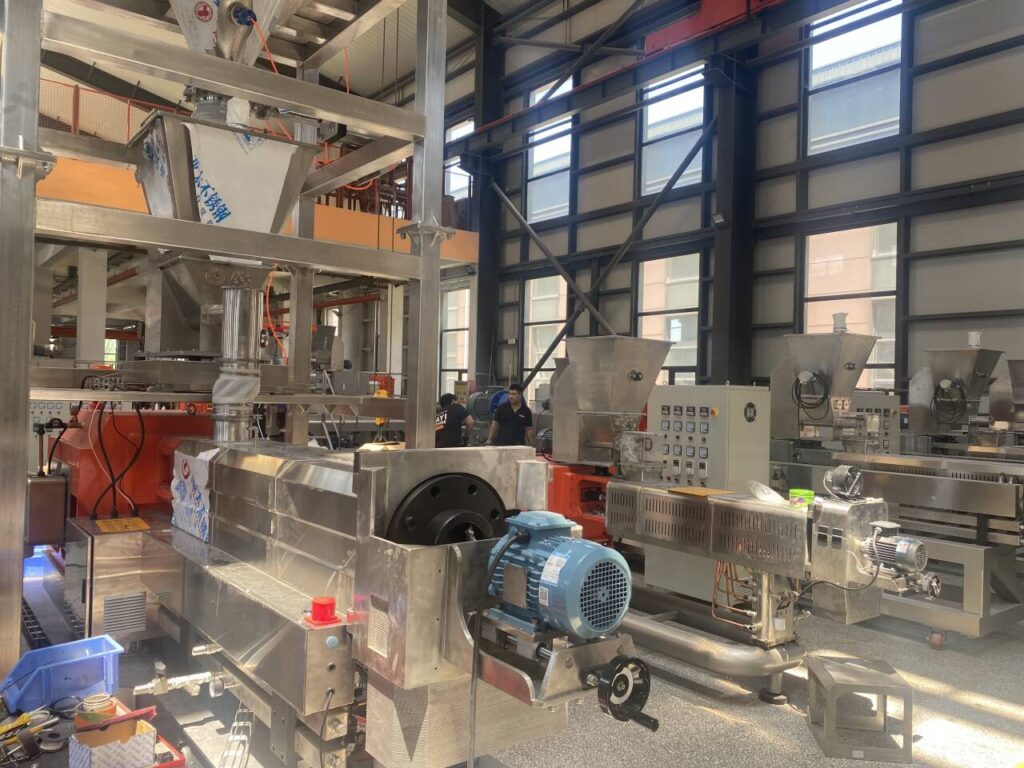
Why Cooling is Necessary
During operation, mechanical friction (between the screw and barrel) and shear heating within the polymer melt generate significant excess heat. If uncontrolled, this heat can:
- Degrade heat-sensitive materials.
- Cause melt inconsistency and poor product quality.
- Reduce viscosity excessively, lowering output pressure and rate.
- Accelerate oxidation and discoloration.
- Damage seals, bearings, and other components.
Primary Cooling Methods
1. Air Cooling
- Method: Uses ambient or forced air circulated by fans/blowers across the extruder barrel.
- Advantages: Simple, low-cost, low-maintenance. Provides gentle, uniform cooling.
- Disadvantages: Lower cooling capacity (limited heat transfer coefficient). Less precise for high-heat loads.
- Best For: Smaller extruders, low to medium output rates, or less heat-sensitive materials.
2. Water Cooling
- Method: Circulates water through jackets or channels surrounding the barrel. snack extruder machine A closed-loop system with a chiller or cooling tower is typical.
- Advantages: High cooling capacity and efficiency. Allows for precise temperature control via regulated flow/ temperature.
- Disadvantages: Higher complexity and cost. Risk of corrosion, leakage, or mineral scale buildup if water quality is poor.
- Best For: Most industrial applications, especially high-output lines, temperature-sensitive processes, and zones with high heat generation.
3. Oil Cooling (Thermal Fluid Systems)
- Method: Circulates temperature-controlled oil or specialized heat transfer fluid.
- Advantages: Can operate at temperatures above water’s boiling point or below its freezing point. Uniform heat transfer and minimal corrosion risk.
- Disadvantages: High initial cost, potential for mess, requires fire safety measures for some fluids.
- Best For: High-temperature processes (e.g., engineering plastics) or applications requiring very precise, high-temperature fluid control.
4. Combined (Hybrid) Systems
Many modern extruders use a combination, such as air cooling for the feed throat (to prevent premature melting and bridging) and water cooling for the transition and metering zones where heat peaks.
Key Components of a Cooling System
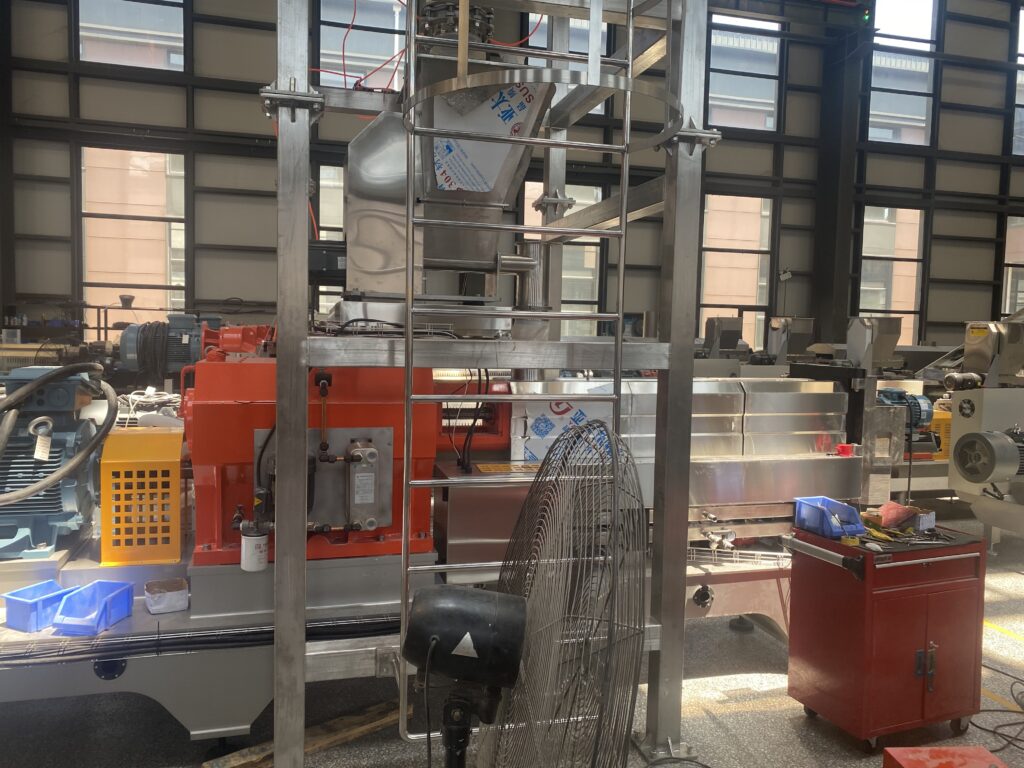
- Cooling Medium Circulator: Chiller, cooling tower, or fan system.
- Heat Exchanger: Jackets, coils, or bubblers integrated into the barrel.
- Control System: PID (Proportional-Integral-Derivative) controllers are standard. They adjust cooling medium flow or temperature based on real-time thermocouple feedback from each barrel zone.
- Pumps, Valves & Piping: For fluid distribution.
- Temperature Sensors: Typically RTDs or thermocouples at each control zone.
Best Practices for Effective Cooling
- Zone-Specific Control: The barrel is divided into multiple independently controlled zones. snack extruder machine Setpoints should follow a gradually increasing profile from feed to die.
- Prevent Over-Cooling: Excessive cooling wastes energy, increases viscosity, and raises motor load. It can also cause temperature cycling (“hunting”) that harms stability.
- Maintain Your System:
- Regularly clean air filters and fan blades.
- Check coolant quality; use treated water or corrosion inhibitors.
- Inspect for leaks, scale buildup, or pump issues.
- Calibrate temperature sensors annually.
- Optimize Process Parameters: Adjust screw speed, back pressure, and barrel setpoints to minimize unnecessary shear heat generation.
- Consider the Material: Different polymers (e.g., PVC vs. Polyolefins) have vastly different thermal sensitivities and optimal temperature profiles.
Troubleshooting Common Cooling Issues
- Temperature Overshooting/Rising: Check for clogged filters, low coolant level, chiller malfunction, or failed control valve.
- Temperature “Hunting” (Cycling): Often caused by an oversized cooling capacity reacting too aggressively. Tune PID controller settings (reduce gain).
- Inconsistent Melt: Ensure cooling is even across the barrel circumference; check for clogged cooling channels.
- High Energy Consumption: May indicate an inefficient cooling system or excessive over-cooling. Audit system performance.
Implementing the right cooling strategy is fundamental for a stable, efficient, and high-quality extrusion operation. While water-based systems offer the best balance of control and capacity for most applications, the choice depends on material, process requirements, and cost. snack extruder machine Regular maintenance and precise, zone-based control are the cornerstones of effective extruder temperature management, ensuring prolonged equipment life and consistent product output.
 Belarusian
  English
  Russian
  Spanish
  Italian
  Arabic
  Portuguese
  German
  French
  Japanese
  Moroccan Arabic
  Persian