
Bugles, known as “Miao Cui Jiao” in China, are a unique three-dimensional puffed snack recognized by their distinctive horn-like shape that fits perfectly on fingertips . This article explores the detailed manufacturing process that transforms basic grain ingredients into these crispy, cone-shaped snacks.
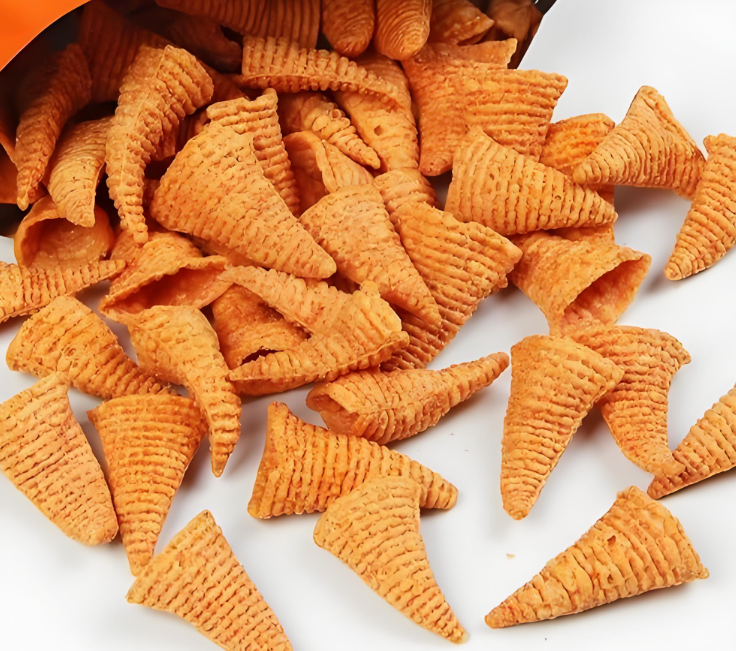
Raw Materials
The production of Bugles begins with a carefully formulated blend of ingredients. The primary raw materials include:
- Corn starch – The main structural component
- Rice starch – Adds lightness to the texture
- Potato starch – Contributes to the crispy mouthfeel
- Water – For hydration and starch gelatinization
- Vegetable oil – Used in the frying process
- Seasonings – Including sugar, salt, flavor enhancers, and spices
The initial moisture content of the raw material mixture is adjusted to approximately 28-35% to facilitate proper starch hydration and subsequent processing .
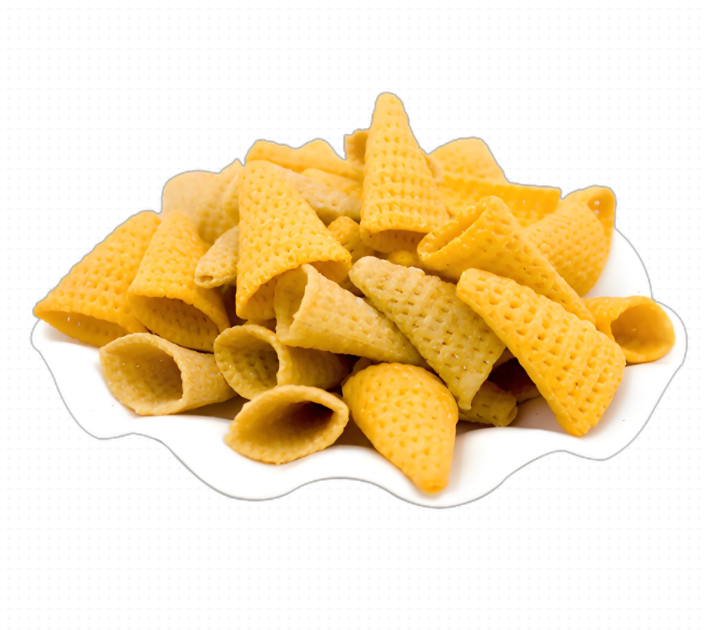
The Step-by-Step Manufacturing Process
Step 1: Mixing and Conditioning
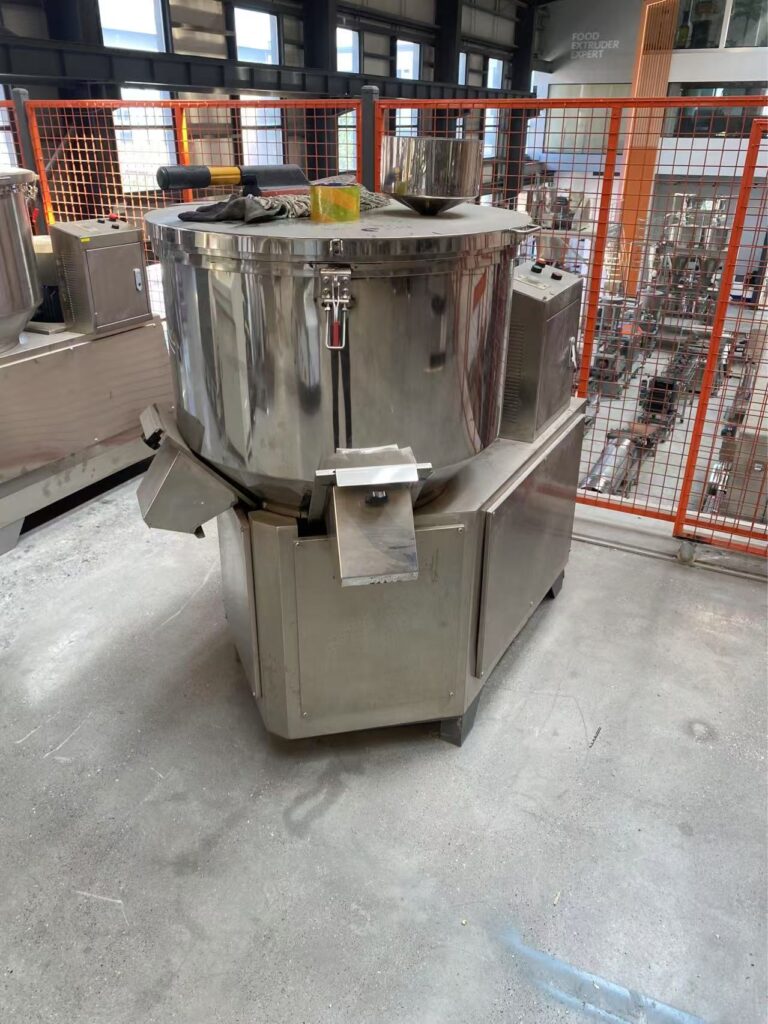
The dry ingredients—corn starch, rice starch, and potato starch—are first loaded into a high-capacity mixer. Water is added gradually while the mixer operates, ensuring even distribution throughout the dry mixture . This hydration step is critical as it allows time for starch gelatinization to begin, which directly influences the final product’s shape and texture .
Step 2: Pre-conditioning
The conditioned mixture enters a pre-conditioning chamber where it undergoes initial cooking. Special screw designs and temperature control mechanisms heat the material to 100-120°C under medium pressure of 2-3 atmospheres . During this stage, the starch achieves 90-100% gelatinization, transforming into a plastic, molten state without residual stress, preparing it for the shaping process .
Step 3: Extrusion
Extrusion is the core technology in Bugles production. The pre-conditioned material enters a low-shear extrusion screw operating at 70-80°C . As the dough passes through specialized dies, it emerges as wide sheets measuring 200mm in width and 0.8-1mm in thickness. These sheets are semi-transparent and highly flexible .
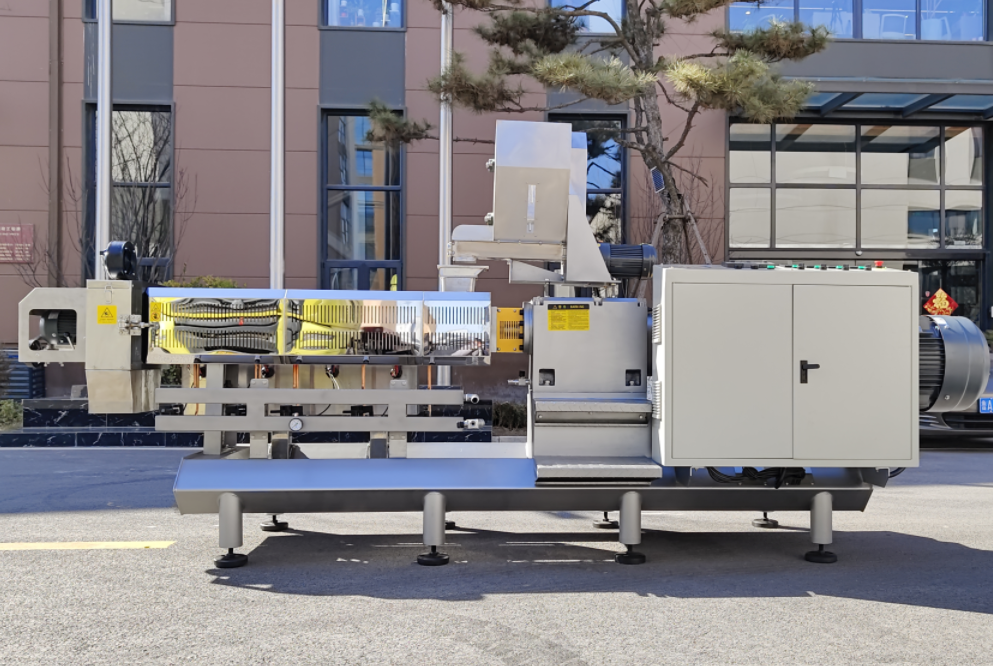
The extrusion process relies on the principle of starch gelatinization and expansion. Within the extruder barrel, the combination of heat (typically 150-200°C), pressure, and mechanical shear causes the starch molecules to break down and reorganize . When the cooked dough exits through the die, the sudden pressure drop causes superheated water to vaporize instantly, expanding the food structure into a porous, crispy matrix .
Step 4: Cooling
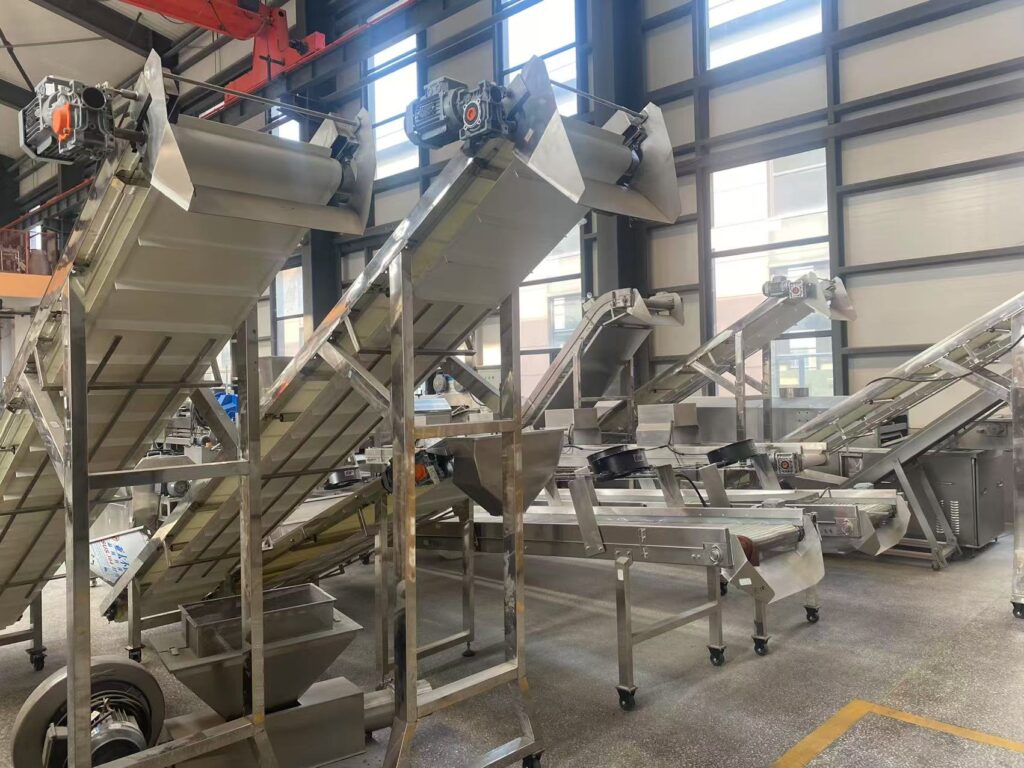
The extruded sheets must travel 8-12 meters through a cooling zone before further processing . This cooling period is essential for stabilizing the sheet structure and ensuring proper release from forming rollers. To conserve factory space, cooling systems are often designed with (vertical circulation systems) that achieve the required cooling length within a compact footprint .
Step 5: Forming – The Signature Cone Shape
This is where the iconic Bugles shape is created. The forming process involves three sequential operations :
Embossing: Two embossing rollers press a mesh-like pattern onto the sheet surface. This texturing not only creates visual appeal but also provides traction for the sheet as it moves through the line. For products requiring smooth surfaces (such as animal-shaped snacks), plain rollers are substituted.
Lamination: Two embossed sheets are guided to overlap precisely and pass through lamination rollers, where they fuse together into a double-layer structure. This dual-layer construction is what gives Bugles their characteristic strength and satisfying crunch.
Cutting and Shaping: The laminated sheet passes over a specialized forming die that cuts and simultaneously shapes the material into hollow cones. The excess material is continuously removed by a (reclaim system) and returned to the extruder, eliminating waste and ensuring continuous production .
Some manufacturing lines use a dedicated bugle shaping machine with roller dies that form the distinctive cone geometry in a single operation .
Step 6: Drying
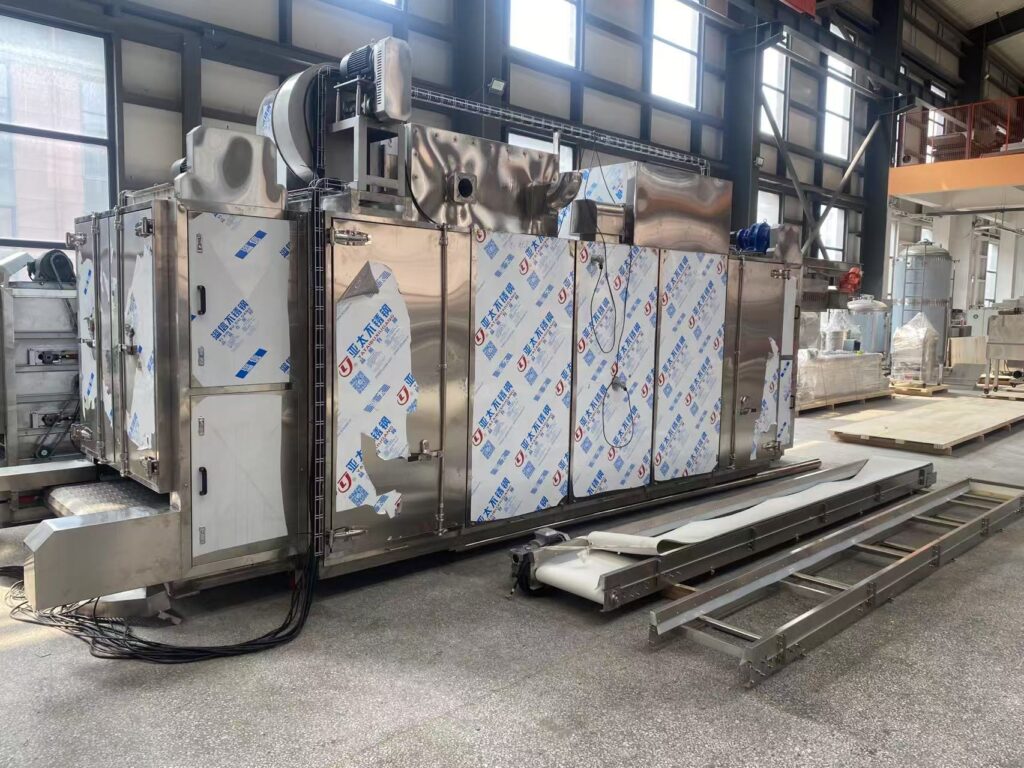
At this stage, the formed Bugles have a moisture content of 20-30% . Before frying, the moisture must be reduced to approximately 12%. Because the product now has a dense, structured form, rapid drying would cause deformation. Therefore, drying occurs at relatively low temperatures (around 60°C) over an extended period . Vibration devices on the drying conveyor prevent the pieces from sticking together as they dry .
Step 7: Frying and Expansion
The semi-dried Bugles enter a continuous fryer containing hot vegetable oil. As the product fries, several transformations occur simultaneously :
- Rapid moisture evaporation – Internal water turns to steam
- Expansion – The snack expands to 2-3 times its original size
- Texture development – The signature crispy, porous structure forms
- Final moisture reduction – Moisture content drops to just 2-3%
After frying, the Bugles pass through a de-oiling station—typically a vibrating screen or centrifugal system—that removes excess surface oil, reducing greasiness and improving mouthfeel .
Step 8: Seasoning
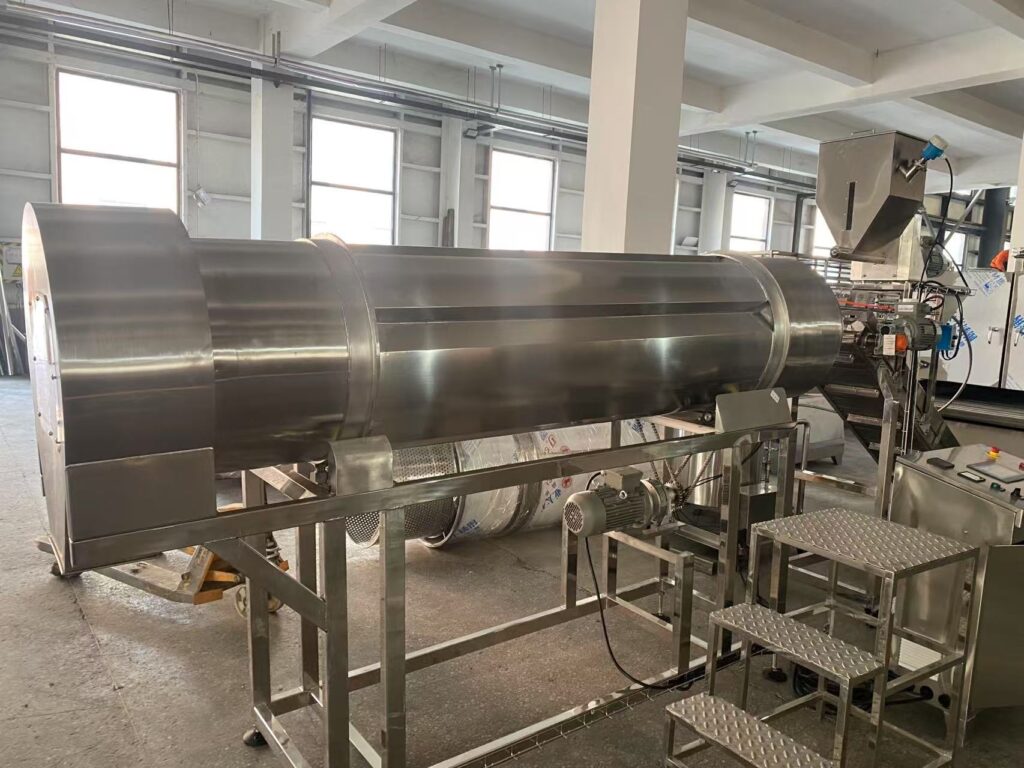
The warm, freshly fried Bugles enter a rotating drum where oil or fat is first sprayed onto the surface to help seasonings adhere . Seasoning powder is then applied using automatic dispensing systems. The tumbling action ensures even coating across all surfaces of the cone-shaped pieces . The amount of oil used for seasoning adhesion can reach up to 10% of the snack’s weight .
Step 9: Cooling and Packaging
After seasoning, the Bugles pass through a cooling conveyor, allowing them to reach ambient temperature before packaging. This prevents condensation inside the packaging, which would compromise crispness. Finally, the cooled snacks are fed into high-speed vertical form-fill-seal packaging machines that weigh, bag, and seal the product at rates exceeding 100 bags per minute .
Quality Control Parameters
Throughout production, manufacturers monitor critical parameters to ensure consistent quality :
| Parameter | Typical Range |
|---|---|
| Extruder barrel temperature | 150-200°C |
| Screw speed | 150 rpm |
| Feed rate | 30 kg/h |
| Raw material moisture | 11-15% (before extrusion) |
| Final product moisture | 2-3% |
| Expansion ratio | 1.38-3.11 |
Production Equipment Overview
A complete Bugles production line consists of the following integrated equipment :
- Flour mixer for dry ingredient blending
- Screw conveyor for material transfer
- Twin-screw extruder (the core processing unit)
- Cooling and pulling system
- Bugle shaping and cutting machine
- Continuous fryer with de-oiling capability
- Seasoning drum
- Cooling conveyor
- Automatic packaging machine
- PLC control system for process automation
Innovation and Flexibility
Modern Bugles production lines offer considerable flexibility. By changing the extrusion die and shaping rollers, the same line can produce various snack shapes including triangles, pillows, shells, and rings . The twin-screw extrusion technology also allows incorporation of different grains and functional ingredients for product innovation .
The relatively short processing time of extrusion cooking helps preserve heat-sensitive nutrients and bioactive compounds, making it possible to develop healthier variants with added protein, fiber, or natural colorants from sources like riceberry or spirulina .
Conclusion
The manufacturing of Bugles represents a sophisticated application of food extrusion technology. From simple starches to the iconic cone-shaped snack, each step—mixing, extrusion, forming, drying, frying, and seasoning—must be precisely controlled to achieve the distinctive texture, shape, and flavor that consumers recognize worldwide. The process exemplifies how food engineering transforms basic agricultural ingredients into value-added convenience foods with global appeal. If you are interested in the bugles making machine , you can contact me , i will give you good advice and solutions .
1.Will you help us with the installation ?
Yes , We will send engineers to install and debug the equipment, and assist in training your staff.
2.Are you a factory or trading company?
We are a factory.
3.What certificate do you have?
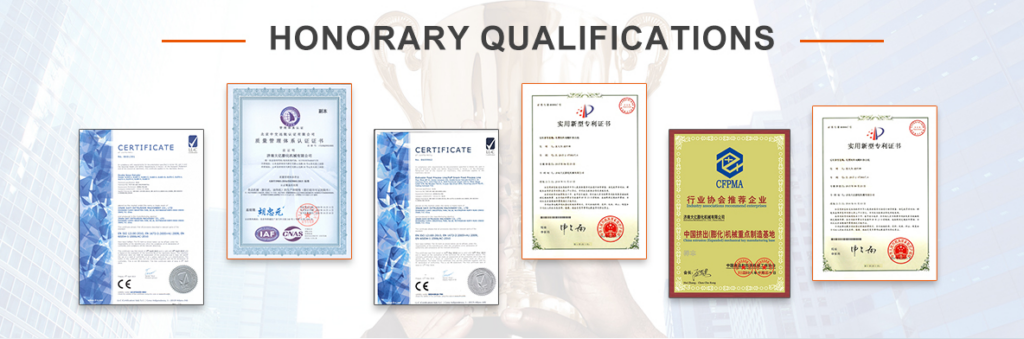
We have ISO and CE certificate.
4.How long is the warranty period?
All of our machines have one year warranty.
5.What’s the main market of your company?
Our customers all over the world.
6.How much production capacity of your company one year?
This depends on your needs.
 Moroccan Arabic
  English
  Russian
  Spanish
  Italian
  Arabic
  Portuguese
  German
  French
  Japanese
  Persian
  Belarusian