
Corn sticks (often called corn curls, puffed corn sticks, or “corn puffs”) look simple—light, crunchy, brightly flavored. But behind that airy bite is a highly engineered process designed for speed, uniformity, and long shelf life. Kurkure making machine This article breaks down the typical industrial workflow, explains what actually creates the “puff,” and highlights the less-discussed steps that shape texture, flavor, and nutrition.
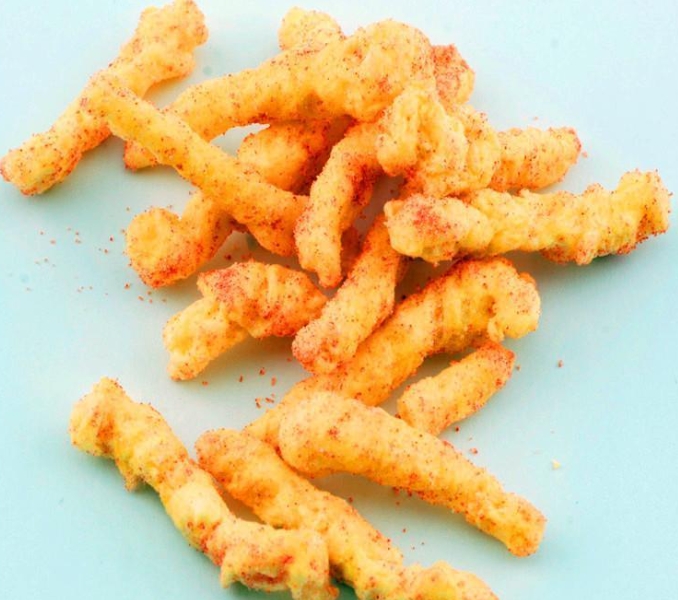
1) What Corn Sticks Really Are
Most corn sticks are extruded snacks. That means a wet, starchy mixture is forced through a machine (an extruder) under high heat and pressure, then suddenly released to normal pressure at the die. Kurkure making machine The rapid pressure drop flashes water into steam, expanding the product into a porous, crunchy structure.
In many factories, the “corn” part may be:
- Corn grits/semolina (common in traditional formulas)
- Corn flour or starch blends
- Mixed cereals (corn + rice/wheat), depending on cost and texture goals
The core is usually starch + water + seasoning system, not whole-kernel corn.
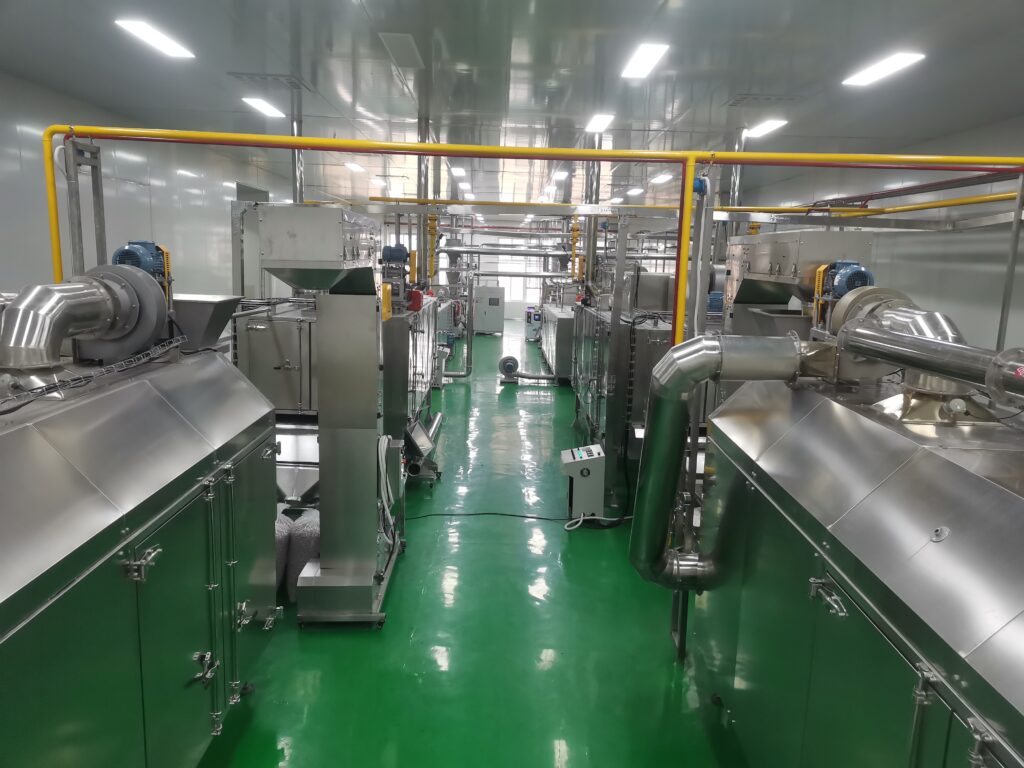
2) Step-by-Step: The Typical Corn Stick Processing Line
A. Raw Material Receiving and Quality Checks
Factories start by checking:
- Moisture content (affects expansion and shelf life)
- Particle size (controls texture and uniform puffing)
- Mycotoxins (important for corn)
- Foreign materials (stones, metal)
This stage is about consistency: extruders dislike surprises.
B. Milling and Blending (Formulation Engineering)
Corn grits/flour are blended with:
- Water (critical for expansion)
- Sometimes salt, sugar, or minor ingredients
- Optional emulsifiers or processing aids (varies by producer)
The “reveal” here is that texture is largely designed before cooking: particle size distribution and hydration determine whether the stick becomes airy, dense, or fragile.
C. Extrusion Cooking (Where the Magic—and the Physics—Happens)
The hydrated mix enters a screw extruder, where it experiences:
- Shear from the rotating screw
- Heat from barrel heaters and friction
- Pressure buildup toward the die
Inside, starch granules gelatinize and form a viscoelastic melt. When the melt exits the die, pressure collapses instantly, water vapor expands, and the snack puffs.
Key variables manufacturers tune (often proprietary):
- Feed moisture
- Screw speed and configuration
- Barrel temperature profile
- Die shape (controls stick diameter and surface)
- Cutter speed (controls length)
D. Drying (Crunch Is Mostly “Moisture Control”)
Fresh extrudate is still relatively moist and can collapse or go stale quickly. Dryers reduce moisture to a low level so the product becomes:
- Crisp
- Stable in storage
- Less prone to microbial growth
Drying also standardizes texture across batches—one reason factory snacks feel so uniform.
E. Oil Application (Often More Than You Think)
Many corn sticks are flavored by applying oil first, then powder seasonings. Oil helps seasoning stick and boosts flavor release.
Common approaches:
- Tumble drum coating with sprayed oil
- Sometimes frying (less common for classic extruded puffs, but possible in some products)
This is a key “exposure” point: even if the base is just corn and water, the finished snack can pick up significant fat during coating.
F. Seasoning Systems (The Real Identity of the Product)
The signature taste typically comes from seasoning blends that may include:
- Salt, sugar
- Cheese powders or dairy flavors
- Spices and yeast extracts
- Acidity regulators (for tang)
- Flavor enhancers (varies by market and regulation)
In practice, two brands can use nearly identical corn bases while tasting totally different due to seasoning chemistry and oil selection.
G. Cooling, Metal Detection, and Packaging
Before packaging, snacks are cooled to prevent condensation. Packaging often uses films with good oxygen and moisture barriers—because:
- Oxygen accelerates fat oxidation (rancid flavors)
- Moisture destroys crispness
Some lines also use nitrogen flushing to slow oxidation and extend shelf life.
3) Why Corn Sticks Puff: A Simple Explanation
Extrusion puffing is essentially controlled expansion:
- Inside the extruder: high pressure keeps water liquid
- At the die: pressure drops; water flashes to steam
- Steam creates bubbles; the starch matrix sets as it cools/drys
You’re eating a starch “foam” stabilized by processing conditions.
4) The Less-Talked-About Realities
“Made from corn” doesn’t mean “whole grain”
Many formulas rely on refined corn fractions. Whole-grain versions exist, but the mainstream market often prioritizes expansion and mild flavor over fiber content.
Texture is engineered, not accidental
Crunch level, melt-in-mouth behavior, and stick uniformity are achieved by tight control of moisture, particle size, and extrusion conditions—more like materials processing than home cooking.
Flavor is often added after cooking
The corn base can be relatively bland. The “addictive” profile commonly comes from the oil + seasoning layer, which is designed for fast flavor impact.
Shelf life is a packaging game
Even perfect extrusion won’t matter if oxygen and moisture get in. Many “freshness” differences between brands are packaging and storage differences.
5) What This Means for Consumers
Corn sticks aren’t automatically “bad,” but they are typically:
- Highly processed (by definition of extrusion and coating)
- Easy to overeat due to low density + high palatability
- Sensitive to oil quality and storage (rancidity risk)
If you’re comparing products, the most meaningful label checks are usually:
- Total fat and sodium
- Ingredient list (oil type, additives)
- Whole grain/fiber claims (if important to you)
 Moroccan Arabic
  English
  Russian
  Spanish
  Italian
  Arabic
  Portuguese
  German
  French
  Japanese
  Persian
  Belarusian