
1. Introduction
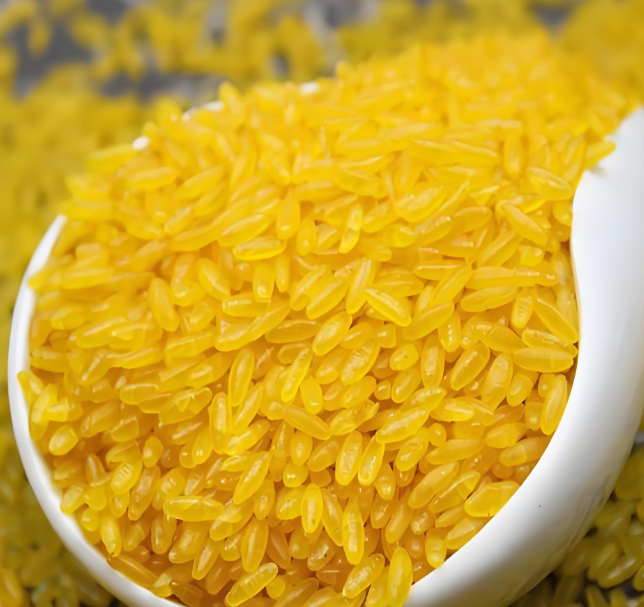
Instant rice (also called quick-cooking rice) is a convenience food designed to shorten preparation time while maintaining acceptable texture, flavor, and nutritional value. Unlike raw milled rice that requires full cooking, instant rice is typically pre-cooked (fully or partially), stabilized, and then dehydrated so it can be rehydrated quickly with hot water or brief heating. Its processing technology focuses on controlling starch gelatinization, moisture migration, and structural integrity to achieve fast reconstitution without excessive stickiness or hardness.
2. Raw Materials and Quality Requirements
The quality of instant rice is strongly influenced by the properties of the raw rice.
- Rice variety: Long-grain and medium-grain rice are commonly used depending on target texture. Amylose content affects firmness and stickiness.
- Milling degree: Uniform milling improves hydration and appearance, but excessive milling may reduce yield and nutritional value.
- Moisture content: Typically controlled to ensure stable storage before processing and consistent cooking behavior.
- Defect control: Broken kernels, chalky grains, and foreign matter should be minimized to improve final product uniformity.
3. Typical Processing Flow
A representative instant rice production line includes the following steps:
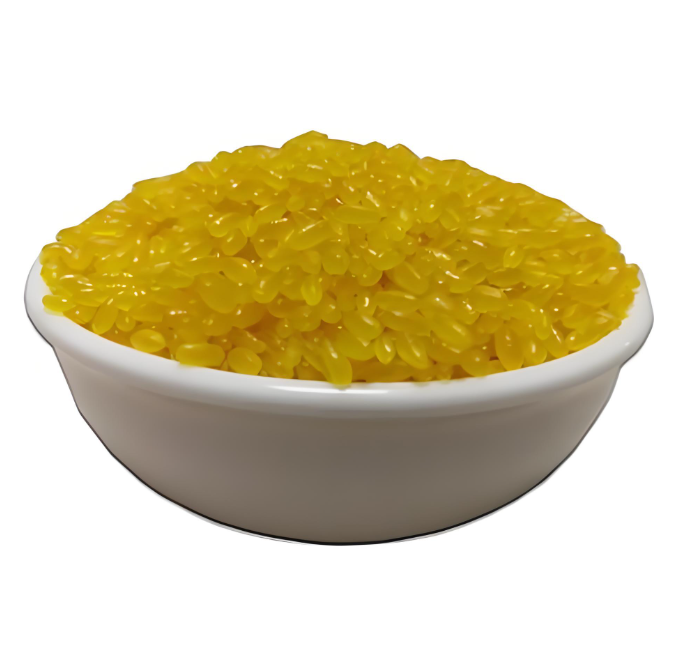
Cleaning → Washing/Soaking → Pre-cooking (steaming/boiling) → Cooling/Tempering → Dehydration (drying) → Optional coating/seasoning → Packaging
Each step is adjusted to match the desired rehydration time, texture profile, and shelf-life requirements.
4. Key Unit Operations
4.1 Cleaning and Washing
Cleaning removes stones, dust, metal fragments, and other impurities using sieves, air classifiers, magnets, and destoners. Washing reduces surface starch and improves color, which helps reduce clumping after rehydration.
4.2 Soaking (Hydration Conditioning)
Soaking is used to hydrate kernels before thermal treatment, enabling more uniform heat transfer and starch gelatinization.
- Purpose: Improve kernel hydration uniformity and reduce cracking during heating.
- Control points: Water temperature, soaking time, and water-to-rice ratio.
- Outcome: Moisture distribution becomes more even, which supports consistent cooking and drying behavior.
4.3 Pre-cooking (Gelatinization Step)
Pre-cooking is the defining step of instant rice technology. It can be performed by boiling, steaming, or a combination.
- Goal: Achieve partial-to-full starch gelatinization while maintaining kernel shape.
- Boiling: Provides rapid and thorough gelatinization but can increase leaching losses if overdone.
- Steaming: Helps preserve grain integrity and reduces solids loss; widely used for better appearance and texture.
The extent of gelatinization influences rehydration speed: higher gelatinization generally reduces reconstitution time but may increase stickiness if structure collapses.
4.4 Cooling and Tempering
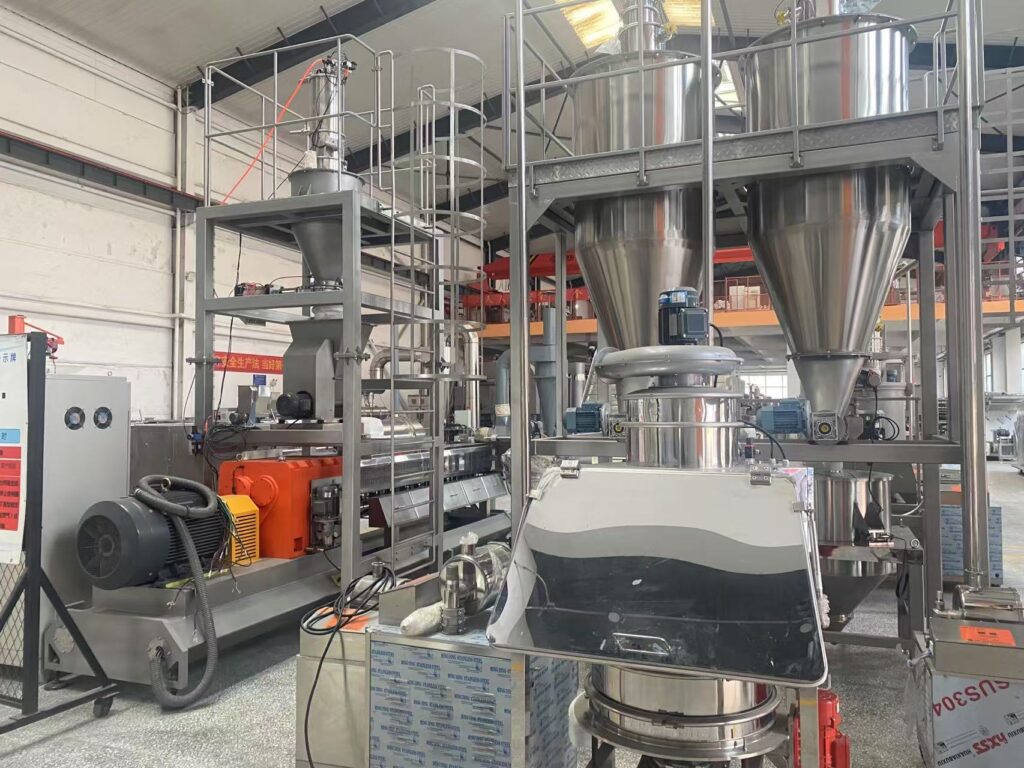
After pre-cooking, rice is cooled to stabilize the structure and reduce surface moisture before dehydration.
- Cooling: Limits overcooking and reduces microbial risk.
- Tempering: Allows moisture equilibration between kernel surface and core, reducing stress cracks during drying and improving uniformity.
4.5 Dehydration and Drying Technology
Drying converts cooked rice into a shelf-stable product and creates micro-porosity that promotes rapid rehydration.
Common dehydration methods include:
- Hot-air drying (convection drying):
- Most widely used due to simplicity and cost-effectiveness.
- Requires careful control to prevent case hardening (a dry outer layer that traps moisture inside).
- Fluidized-bed drying:
- Enhances heat and mass transfer, improves uniformity, and reduces drying time.
- Suitable for large-scale continuous operations.
- Freeze drying (lyophilization):
- Produces highly porous rice with excellent rehydration and texture retention.
- High cost; often used for premium products.
- Vacuum drying or vacuum-microwave drying:
- Can shorten drying time and improve porosity at lower temperatures.
- Requires higher equipment investment and process optimization.
Target final moisture is typically low enough to ensure shelf stability and prevent microbial growth while avoiding excessive brittleness and breakage during handling.
5. Texture and Rehydration Performance Control
Instant rice quality is often evaluated by rehydration time, hardness, stickiness, and kernel integrity after preparation.
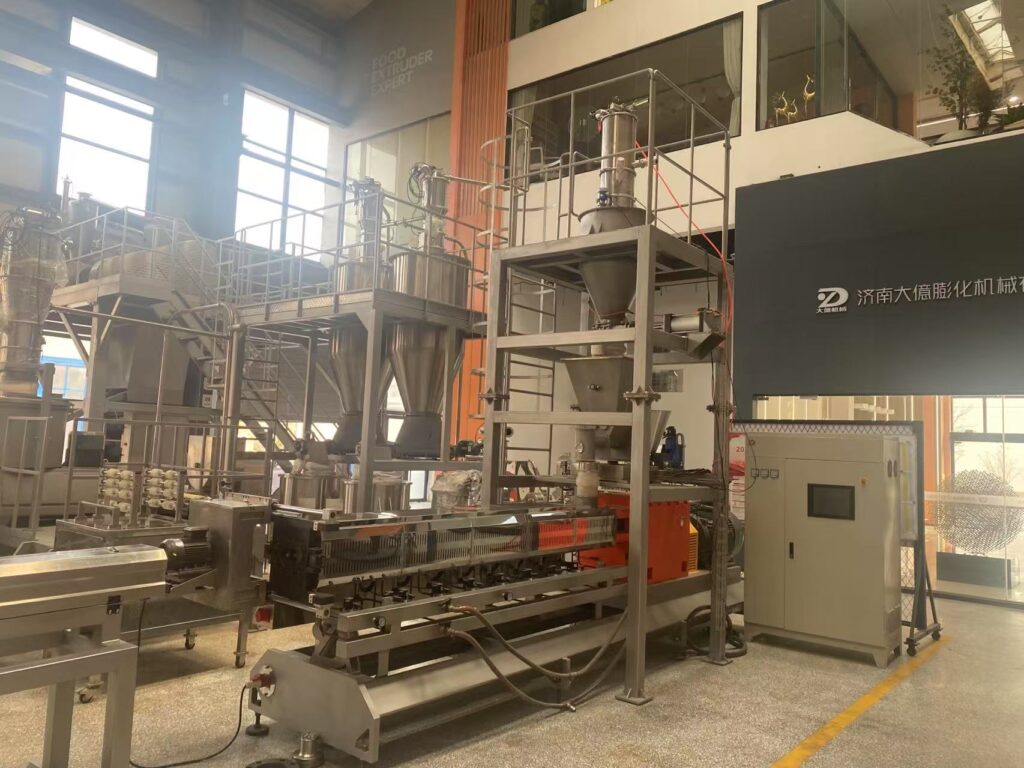
Key factors affecting performance:
- Gelatinization degree: Controls how quickly water penetrates and how soft the rice becomes.
- Porosity development: Driven by dehydration method and drying conditions; more pores usually mean faster rehydration.
- Kernel damage and breakage: Caused by thermal stress and aggressive drying; reduces appearance and increases mushiness.
- Starch retrogradation: Occurs during cooling/storage of cooked rice; moderate retrogradation can improve firmness, but excessive retrogradation can cause hard texture and poor rehydration.
Process optimization balances these factors to achieve fast preparation with desirable eating quality.
6. Optional Steps: Fortification, Flavoring, and Surface Treatments
Some products incorporate nutritional or sensory enhancements:
- Vitamin/mineral fortification: Iron, zinc, B vitamins, etc.
- Seasoning or sauce inclusion: For ready-meal style products.
- Oil or emulsifier treatments: To reduce clumping and improve mouthfeel (must be controlled to avoid rancidity).
7. Packaging and Shelf-Life Considerations
Instant rice must be protected from moisture uptake and oxidation.
- Packaging materials: High-barrier laminated pouches, multi-layer films, or cups with sealed lids.
- Atmosphere control: Nitrogen flushing can reduce oxidative rancidity in flavored products.
- Quality control: Moisture, water activity, microbial limits, and sensory stability are monitored to ensure safe storage.
Instant rice processing integrates controlled hydration, thermal gelatinization, and dehydration technologies to deliver a product that reconstitutes quickly while maintaining acceptable texture and appearance. Advances in drying methods (such as fluidized-bed, vacuum, and freeze drying) and improved control of starch behavior continue to enhance product quality, reduce energy consumption, and broaden the range of instant rice products available to consumers.
 Moroccan Arabic
  English
  Russian
  Spanish
  Italian
  Arabic
  Portuguese
  German
  French
  Japanese
  Persian
  Belarusian