
Textured soy protein—also called TSP or TVP (textured vegetable protein)—is a soy-based ingredient engineered to have a chewy, meat-like texture. It is widely used in plant-based foods, soybean extruder ready meals, snacks, and as an extender in meat products. Industrial production relies mainly on protein extraction + extrusion texturization, followed by drying and sizing.
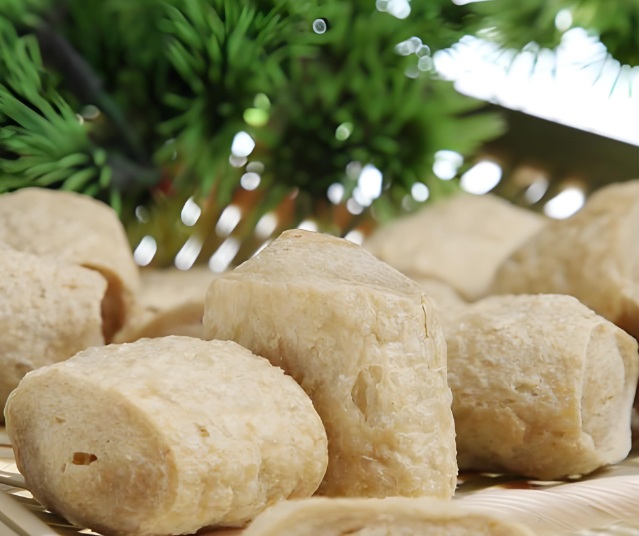
Below is a clear overview of the most common processing route and key process options.
1) Raw Materials and Preparation
Common inputs
- Defatted soybean flakes/flour (most common starting material)
- Soy protein concentrate (SPC) or soy protein isolate (SPI) (used for higher protein or specific textures)
- Optional: wheat gluten, starches, fibers, flavors, color, salts
Basic preparation steps
- Cleaning and dehulling soybeans (if processing from whole beans)
- Cracking and flaking
- Oil extraction (solvent extraction or mechanical pressing) to produce defatted flakes
- Milling to flour and sieving for uniform particle size
Many factories purchase defatted flakes or soy flour and begin from milling/blending.
2) Protein Concentration (Optional but Common)
TVP can be made from different protein bases:
- From soy flour (lower protein TVP): simpler and cheaper; soybean extruder texture is often more porous.
- From SPC (≈65–70% protein): produced by washing defatted flakes with aqueous alcohol or acid/water to remove soluble sugars; improves flavor and protein level.
- From SPI (≥90% protein): produced by alkaline extraction and isoelectric precipitation; yields cleaner flavor and higher functionality but costs more.
This step affects protein content, flavor (beany notes), water absorption, and final bite.
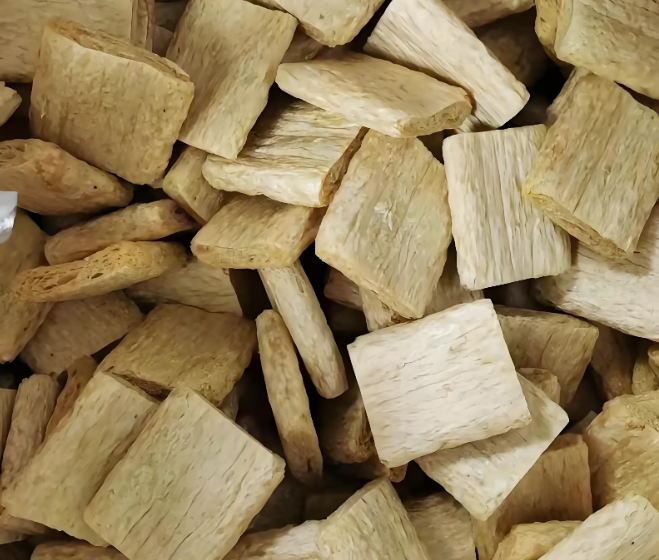
3) Blending, Hydration, and Pre-Conditioning
Before extrusion, the dry base is blended and adjusted for consistency:
- Dry blending: soy flour/SPC/SPI + minor ingredients
- Water addition: to reach a target moisture level (commonly around 15–35%, depending on product and extruder type)
- Optional: steam injection in a pre-conditioner to begin heating and hydrating
Good hydration is critical for stable extrusion and uniform texture.
4) Extrusion Texturization (Core Step)
Extrusion is the main method used to create the fibrous, meat-like structure.
What happens in the extruder
Inside the barrel, the material experiences:
- Heat
- Shear
- Pressure
- Controlled moisture
These conditions denature and realign soy proteins. When the cooked mass exits the die and pressure drops, structure sets into a porous or fibrous matrix.
Two main extrusion approaches
A) Low-moisture extrusion (most common for dried TVP chunks/granules)
- Produces expanded, porous pieces
- Typically followed by drying
- Final product is shelf-stable and rehydrates quickly (e.g., TVP granules)
B) High-moisture extrusion (for fresh/frozen meat analog “whole cuts”)
- Uses higher water content and often a cooling die
- Produces denser, layered/fibrous texture
- Usually not dried; packed chilled/frozen
Equipment choice (single-screw vs. twin-screw) depends on formulation complexity and desired structure; twin-screw systems offer stronger mixing/control for challenging recipes.
5) Cutting, Drying, and Cooling
For low-moisture TVP
- Cutting: rotating knife adjusts piece length (granules, strips, chunks)
- Drying: belt or fluidized-bed dryers reduce moisture for shelf stability
- Cooling: stabilizes texture and prevents condensation in packaging
Drying conditions matter: overly aggressive drying can create brittle texture or poor rehydration.
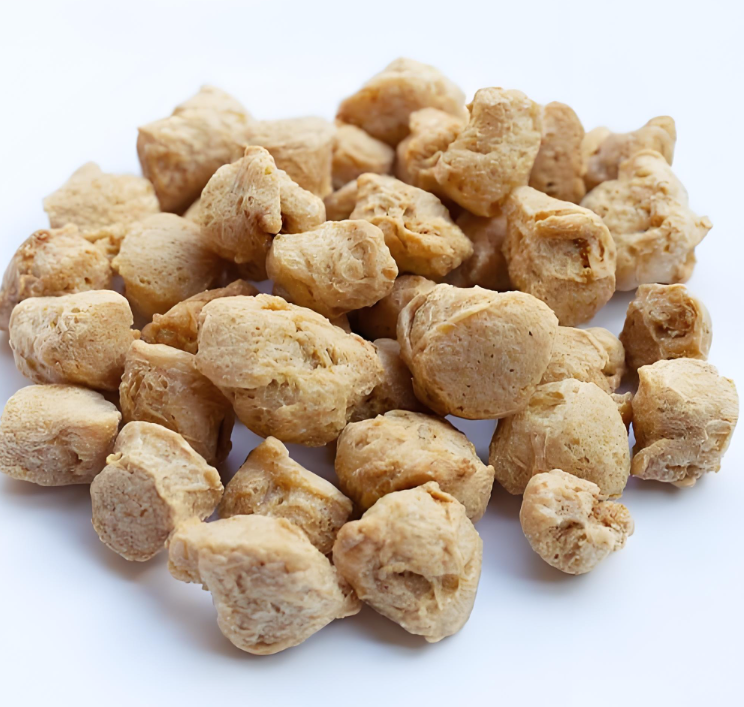
6) Sizing, Classification, and Rework
After drying, TVP is processed to meet product specs:
- Sieving/classification into defined sizes
- Milling (if producing smaller granules)
- Rework loop to reduce waste and maintain yield
7) Optional Post-Processing (Flavor and Function)
Depending on end use, manufacturers may add:
- Seasoning/flavor coating
- Color (e.g., caramel color, natural extracts)
- Oil coating (improves mouthfeel but affects shelf life)
- Agglomeration for better instant rehydration
Some products also undergo deodorization or formulation adjustments to reduce beany flavor.
8) Quality Control and Packaging
Key QC checks often include:
- Moisture content (shelf-stability)
- Protein content
- Water absorption/rehydration time
- Texture metrics (hardness/chewiness)
- Microbiological standards
- Particle size distribution
Packaging is typically moisture-proof bags (bulk or retail), soybean extruder often with oxygen barrier depending on fat level and shelf-life targets.
Textured soy protein is most commonly produced by preparing a soy protein base (flour/SPC/SPI), then using controlled hydration and extrusion to create structure, soybean extruder followed by cutting, drying, sizing, and packaging. The final texture—granular, chunky, or fibrous—depends mainly on protein base, moisture level, extrusion conditions, and die/cooling design.
 Arabic
  English
  Russian
  Spanish
  Italian
  Portuguese
  German
  French
  Japanese
  Moroccan Arabic
  Persian
  Belarusian