
Introduction
The breakfast cereal aisle in any supermarket presents a dazzling array of shapes, colors, and textures. Behind this variety lies a complex manufacturing process that transforms simple cereal grains—corn, wheat, rice, and oats—into the crispy, shelf-stable products that are a staple of the modern breakfast table. This article provides a complete, step-by-step guide to the industrial production of processed breakfast cereals, with a particular focus on the iconic corn flake.
While traditional cereals like oatmeal require cooking, the focus of this guide is on Ready-to-Eat (RTE) cereals. These products undergo a series of thermal and mechanical processes that gelatinize starches, develop flavor, and create the characteristic crunchy texture that holds up in a bowl of milk .
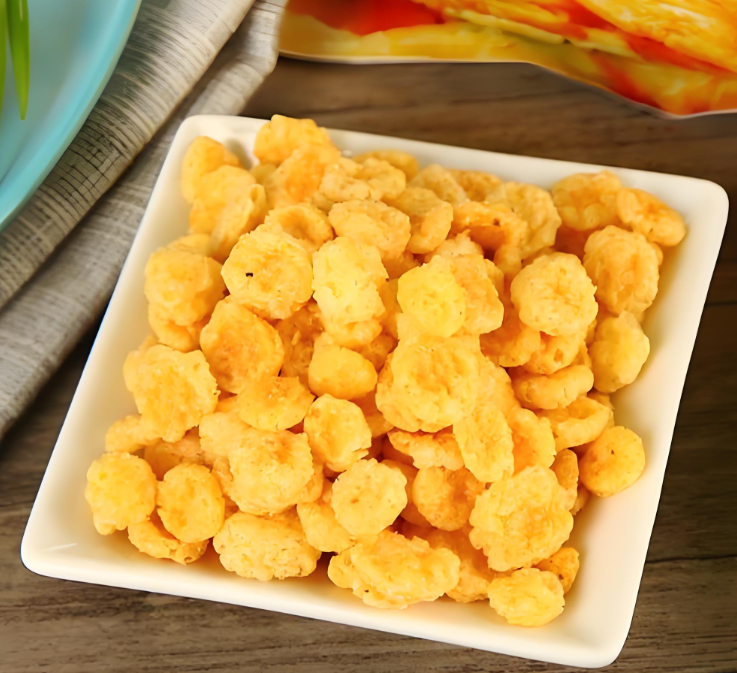
Section 1: Raw Materials and Preparation
The quality of any finished cereal begins with its ingredients. The primary raw materials are the grains themselves, most commonly corn, wheat, rice, and oats. For products like corn flakes, the grain must be carefully milled. Manufacturers use specific parts of the kernel, such as corn grits, which are free from the germ and bran to ensure a consistent texture and prevent rancidity .
Beyond the base grain, the recipe includes several other essential components:
- Flavoring agents: This includes salt, malt syrup, and sugar.
- Fortification ingredients: Vitamins and minerals are added later in the process to ensure the final product meets nutritional labeling requirements.
- Water: Crucial for hydration and steam during cooking.
Before any cooking takes place, the raw grains must be handled and prepared. This begins in the material handling phase, where grains are transported from silos, cleaned to remove foreign material like stones or dust, and then precisely weighed and blended according to the product’s formulation . Some processes may also involve pre-treating the raw materials, such as tempering grains to a specific moisture content to make them pliable for milling .
Section 2: The Cooking Process
The first major transformation of the grain occurs during cooking. The primary goal at this stage is to gelatinize the starch. Starches are naturally occurring granules that are insoluble in cold water. When heated in the presence of moisture, they absorb water, swell, and rupture, transforming the hard, gritty grain into a soft, pliable, and digestible material.
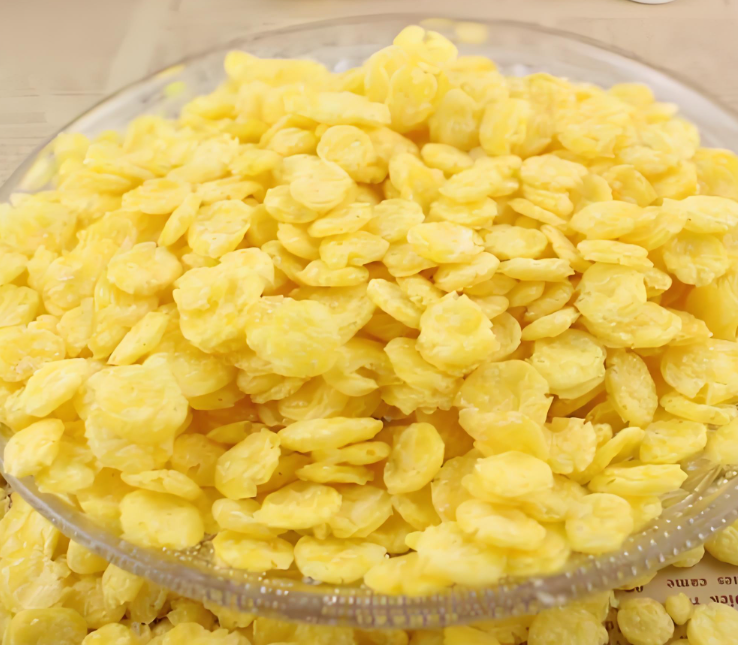
There are two primary methods for cooking breakfast cereals:
1. Batch Cooking (The Traditional Method)
This method is used for producing classic flaked cereals like corn flakes. The cleaned grits are loaded into a large pressure vessel called a batch cooker or rotary cooker. They are mixed with the flavoring syrup (containing sugar, salt, and malt) and enough water to achieve the correct moisture content. The vessel is then sealed, and steam is injected to bring the pressure up to about 15-18 psi. The mixture is cooked for up to two hours . During this time, the rotating drum ensures a homogeneous result, evenly distributing heat and moisture so every grit becomes uniformly cooked and flexible for the next stage .
2. Extrusion Cooking (The Modern Method)
For many modern cereals—especially shaped puffs, loops, and flakes—extrusion is the preferred method. In this continuous process, dry ingredients (often flour or fine meal) are fed into a twin-screw extruder . At the same time, a liquid solution of flavors, sugar, and water is injected. As the screw rotates, it conveys, mixes, and heats the material through friction and external barrel heaters. This cooks the dough under high pressure and temperature in a matter of seconds. Finally, the cooked, plasticized dough is forced through a die at the end of the barrel, emerging as a rope or ribbon that is cut into pellets by a rotating knife .
Section 3: Forming, Drying, and Tempering
Once cooked, the product must be prepared for its final shape.
After batch cooking, the mass of agglomerated, cooked grain is discharged from the cooker and broken apart into individual cooked grits or pellets. These pieces are then sent to a dryer to reduce their surface moisture. This step is critical as it gives the pieces the right consistency for flaking. Following drying, the material undergoes a crucial step called tempering . During tempering, the pieces are held in storage bins for a period of time (anywhere from a few minutes to several hours). This allows the moisture and temperature to equalize throughout each piece. If a pellet is too moist or too dry on the inside, it will not form a good flake. Tempering ensures the pieces are uniformly pliable. Research on corn flakes shows that precise control of steaming and tempering times—for instance, tempering for 30-40 minutes—significantly reduces the amount of fine material (meal) produced during flaking, improving overall yield .
In an extruded flake process, the dried and tempered pellets are now ready to be turned into flakes .
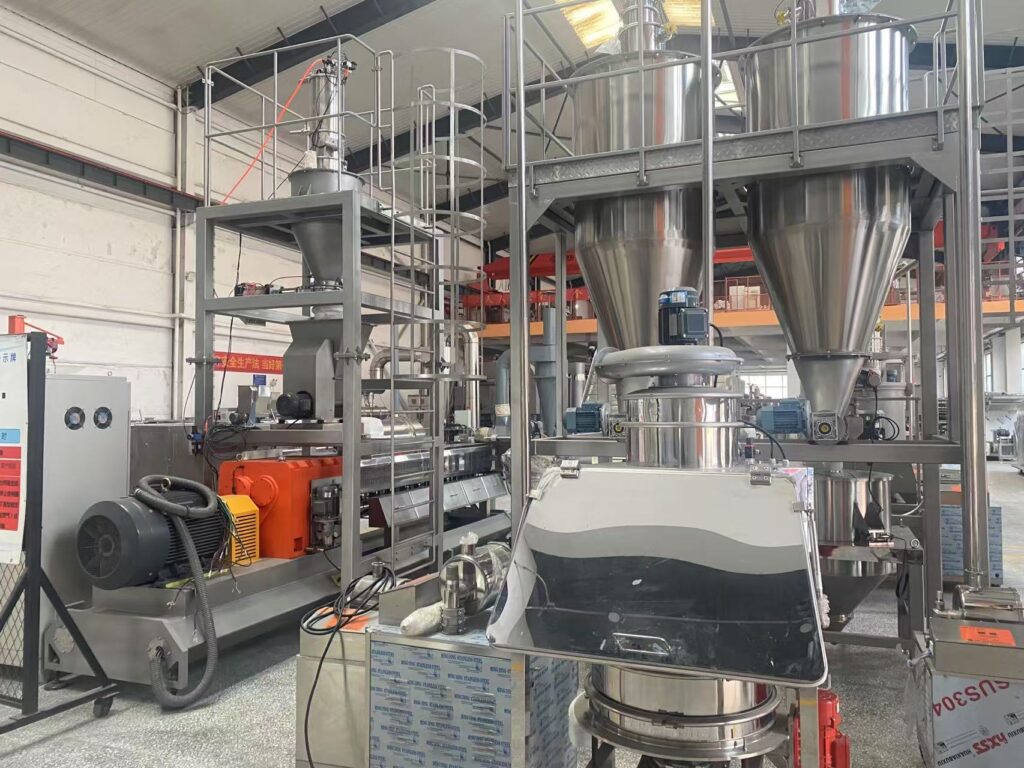
Section 4: Flaking and Toasting
This is where the product gains its recognizable form and final texture.
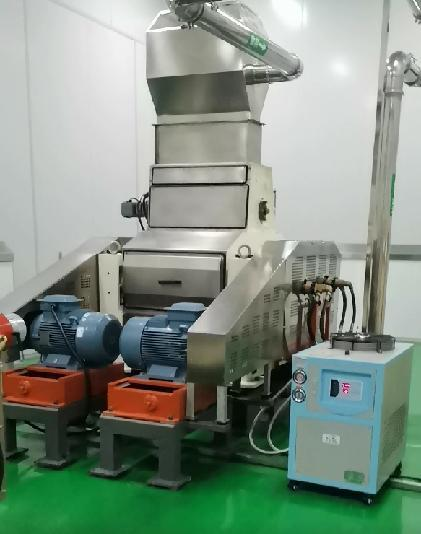
Flaking
The tempered pellets (from either the traditional or extrusion process) are passed through a pair of large, smooth, rotating rollers known as a flaking mill or roller mill . The gap between the rollers is precisely set, typically between 0.3 and 0.4 mm . As the soft, plastic pellets are crushed between the rollers, they are flattened into thin flakes. The pressure from the rollers spreads the pellet outward, creating the characteristic large, thin shape of a cornflake.
Toasting
The raw, moist flakes are still limp and pliable at this point. They are conveyed into a toasting oven—a large, multi-zone oven that blasts them with high-velocity hot air . This step achieves several things at once:
- Drying: It rapidly reduces the moisture content of the flakes from around 20-30% down to the final 1-3%.
- Cooking and Browning: The intense heat continues to cook the starches and triggers Maillard reactions, which are chemical reactions between amino acids and reducing sugars that create the golden-brown color and the deep, roasted, toasty flavor we associate with breakfast cereals .
- Texturizing: The rapid expansion of the remaining moisture within the flake creates the final crispy, crunchy texture. As the steam escapes, it can form the small blisters on the surface of a cornflake .
Section 5: Finishing Touches and Packaging
After toasting, the cereal is fragile and ready for its final enhancements.
Coating and Fortification
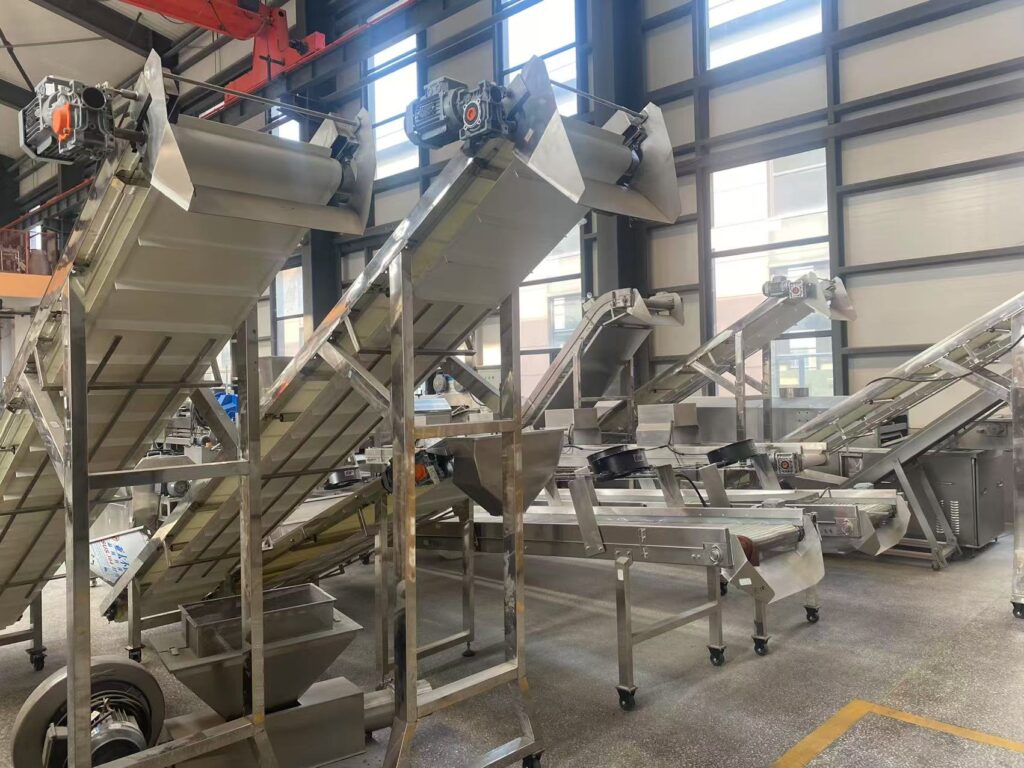
Many cereals receive a final coating to add sweetness or preserve crispness in milk. This is done in a revolving drum called an enrober or coating drum . Here, the base flakes are sprayed with a fine mist of a coating solution, which might contain sugar, honey, chocolate, or vitamins. For a sugar-coated cereal, the flakes are tumbled with a syrup and then dried briefly to set the coating into a hard, glossy shell.
Following any wet coating, fortification is a critical step. Because some vitamins can be destroyed by the high heat of cooking and toasting, they are often sprayed onto the cereal after processing. This ensures that the final product delivers the nutritional profile promised on the box .
Cooling and Packaging
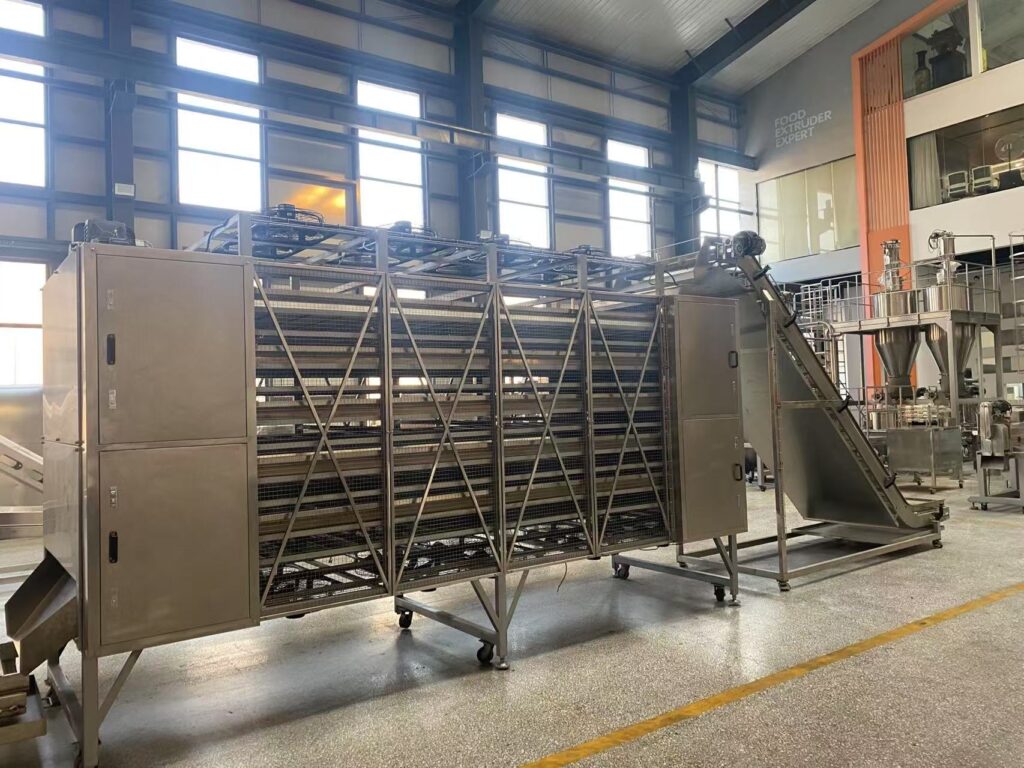
Before packaging, the cereal must be cooled to near room temperature in a cooling conveyor or fluid bed cooler . This prevents condensation from forming inside the packaging, which would ruin the crispiness and promote mold growth. The finished cereal is then transported gently to the packaging line, where it is weighed and filled into bags inside boxes. The packaging material itself is a critical line of defense, designed to create a barrier against moisture and oxygen, keeping the cereal crispy and fresh during its journey from the factory to the consumer’s pantry .
Conclusion
The production of breakfast cereal is a masterpiece of food engineering. It is a carefully controlled sequence of operations—cooking, drying, tempering, flaking, and toasting—each designed to transform humble grains into a desirable food product. By precisely manipulating moisture, heat, and pressure, manufacturers create the satisfying textures and flavors that have made breakfast cereals a beloved food around the world for over a century . If you are interested in corn flakes production line , you can contact me , i will give you good advice and solutions .
1.Will you help us with the installation ?
Yes , We will send engineers to install and debug the equipment, and assist in training your staff.
2.Are you a factory or trading company?
We are a factory.
3.What certificate do you have?
We have ISO and CE certificate.
4.How long is the warranty period?
All of our machines have one year warranty.
5.What’s the main market of your company?
Our customers all over the world.
6.How much production capacity of your company one year?
This depends on your needs.
 Arabic
  English
  Russian
  Spanish
  Italian
  Portuguese
  German
  French
  Japanese
  Moroccan Arabic
  Persian
  Belarusian