
Baking is a critical processing stage for many puffed food products, serving multiple functions from moisture reduction and texture setting to flavor development and color formation.corn puffed snack machine line supply Unlike extrusion puffing which relies on rapid pressure release, corn puffed snack machine line supply baking uses controlled heat application to finish and enhance pre-puffed or formed products. Here is a comprehensive guide on how to bake puffed foods effectively.
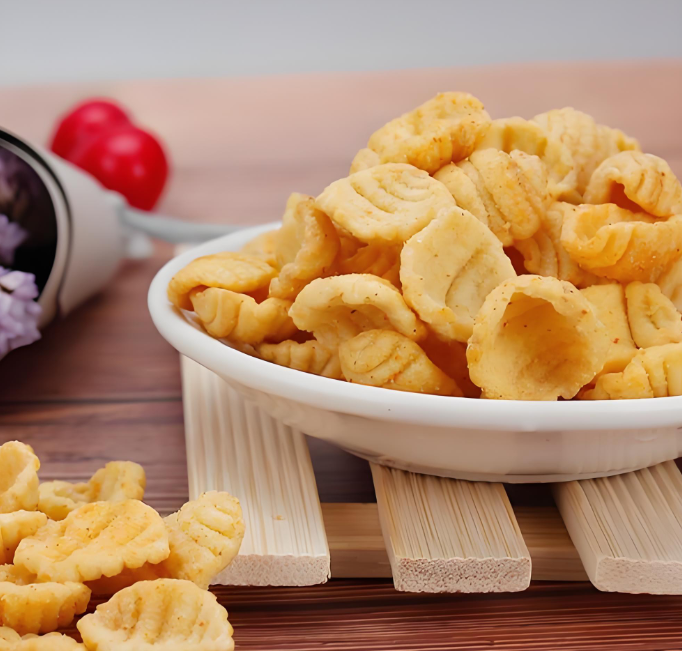
1. Purpose of Baking in Puffed Food Production
Baking serves several key purposes:
- Moisture Reduction: Lowers internal moisture from ~8-10% post-extrusion to a shelf-stable 1-3%
- Texture Setting: Creates final crispiness through starch retrogradation and protein denaturation
- Flavor Development: Generates roasted, toasted, and nutty notes via Maillard reactions and caramelization
- Color Formation: Produces appealing golden-brown hues
- Structure Stabilization: Sets the porous architecture formed during initial puffing
- Microbial Safety: Pasteurizes the product through sustained heat
2. Types of Puffed Foods That Require Baking
- Breakfast cereals (corn flakes, rice crisps)
- Puffed grain cakes (rice cakes, corn cakes)
- Certain extruded snacks (baked cheese puffs, pretzels)
- Puffed protein snacks
- Multi-grain crisps and crackers
3. The Baking Process: Step-by-Step
A. Pre-Baking Preparation
- Product Stabilization: Allow freshly extruded/puffed products to equilibrate for 5-15 minutes to prevent structural collapse during initial heat exposure
- Uniform Spreading: Distribute product evenly on baking trays or conveyor belts to ensure consistent heat exposure
- Pre-drying (if needed): For very high moisture products, initial low-temperature drying (60-80°C) may precede actual baking
B. Baking Parameters and Control
Successful baking requires precise management of four interrelated parameters:
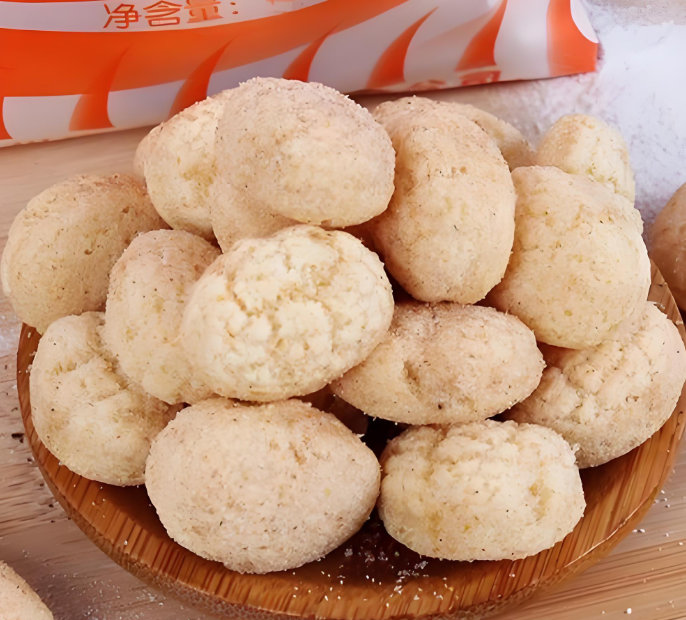
Temperature Profile:
- Initial Zone: 120-140°C – Gentle heating to prevent case hardening (surface crust formation that traps moisture)
- Middle Zone: 160-180°C – Primary baking zone for moisture removal and browning
- Final Zone: 100-120°C – Gradual cooling to set structure and prevent checking (stress cracking)
Time:
- Typically 5-15 minutes depending on product density and thickness
- Thin products (2-3 mm): 5-8 minutes
- Thicker products (8-10 mm): 10-15 minutes
Airflow and Humidity Control:
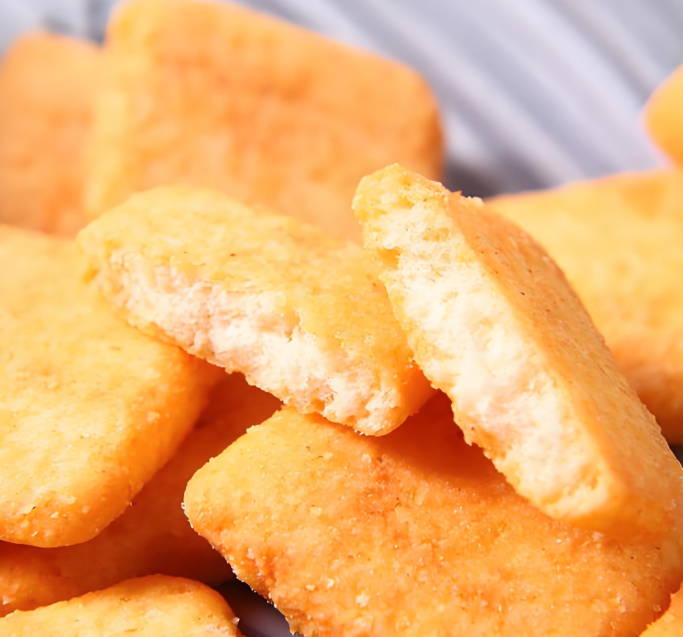
- Balanced airflow removes moisture without excessive product dehydration
- Controlled humidity (10-20% RH in oven) prevents surface cracking
- Air velocity: 1-3 m/s for most applications
Heat Transfer Method:
- Convection Baking: Most common – forced hot air provides even heating
- Conduction Baking: Direct contact with hot surfaces for specific products
- Combination Systems: Often include infrared elements for surface browning
4. Chemical and Physical Changes During Baking
Moisture Migration and Removal
- Free moisture evaporates first (60-100°C)
- Bound moisture requires higher temperatures (100-140°C)
- Proper temperature gradient ensures even drying from interior to exterior
Structural Changes
- Starch Retrogradation: Reordering of starch molecules increases crispiness
- Protein Denaturation: Further sets product structure
- Pore Structure Stabilization: Prevents collapse of the puffed architecture
Flavor and Color Development
- Maillard Reactions: Amino acids + reducing sugars → brown pigments and complex flavors (optimal at 140-165°C)
- Caramelization: Sugar breakdown (begins around 110°C, accelerates above 160°C)
- Lipid Oxidation: Controlled development of toasted notes
5. Equipment for Baking Puffed Foods
A. Oven Types:
- Multi-Pass Conveyor Ovens: Most common in commercial production
- Multiple tiers maximize floor space
- Independent temperature zones
- Typical length: 15-40 meters
- Rotary Ovens:
- Gentle tumbling action ensures even exposure
- Excellent for coating integrity
- Common for cereal clusters or coated products
- Impinger Ovens:
- High-velocity air jets
- Rapid heat transfer
- Good for thin, delicate products
B. Control Systems:
- Programmable Logic Controllers (PLCs) for precise temperature profiles
- Humidity sensors and controls
- Automated dampers for airflow adjustment
- Energy recovery systems (heat exchangers)
6. Common Baking Defects and Solutions
| Defect | Probable Cause | Solution |
|---|---|---|
| Uneven Browning | Inconsistent airflow or temperature | Calibrate fans, clean filters, verify burner function |
| Case Hardening | Initial temperature too high | Lower initial zone temperature, increase humidity |
| Checking/Cracking | Too rapid cooling | Implement gradual cooling zone, reduce final zone temperature gradient |
| Insufficient Crispness | Inadequate moisture removal | Increase baking time or temperature, verify oven humidity |
| Burnt Flavors | Excessive temperature in final zones | Reduce temperature, increase conveyor speed |
| Structural Collapse | Insufficient pre-stabilization | Increase equilibration time before baking, adjust formulation |
7. Post-Baking Processing
- Cooling:
- Essential before packaging (prevents condensation)
- Forced ambient air cooling for 5-10 minutes
- Final moisture equilibration
- Quality Checks:
- Moisture content verification (target: 1-3%)
- Color assessment (colorimeter or visual standards)
- Texture analysis (crispness, hardness)
- Breakage/size distribution
- Secondary Flavoring (if applicable):
- Some products receive flavor coatings after baking
- Requires additional drying if coatings add moisture
8. Advanced Baking Techniques
Steam-Assisted Baking:
- Introduces brief steam pulses at beginning
- Delays crust formation for more uniform internal baking
- Particularly effective for thick products
Two-Stage Baking:
- First stage: Low temperature (100-120°C) for thorough drying
- Second stage: Higher temperature (140-160°C) for browning
- Produces superior texture and flavor complexity
Variable Airflow Baking:
- Different airflow patterns at different stages
- High airflow initially for moisture removal
- Reduced airflow during browning phase
Baking puffed foods is a transformative process that converts wet, fragile extrudates into stable, flavorful, crispy snacks. Success depends on understanding the interplay between time, temperature, humidity, and airflow, and how these parameters interact with specific product formulations.
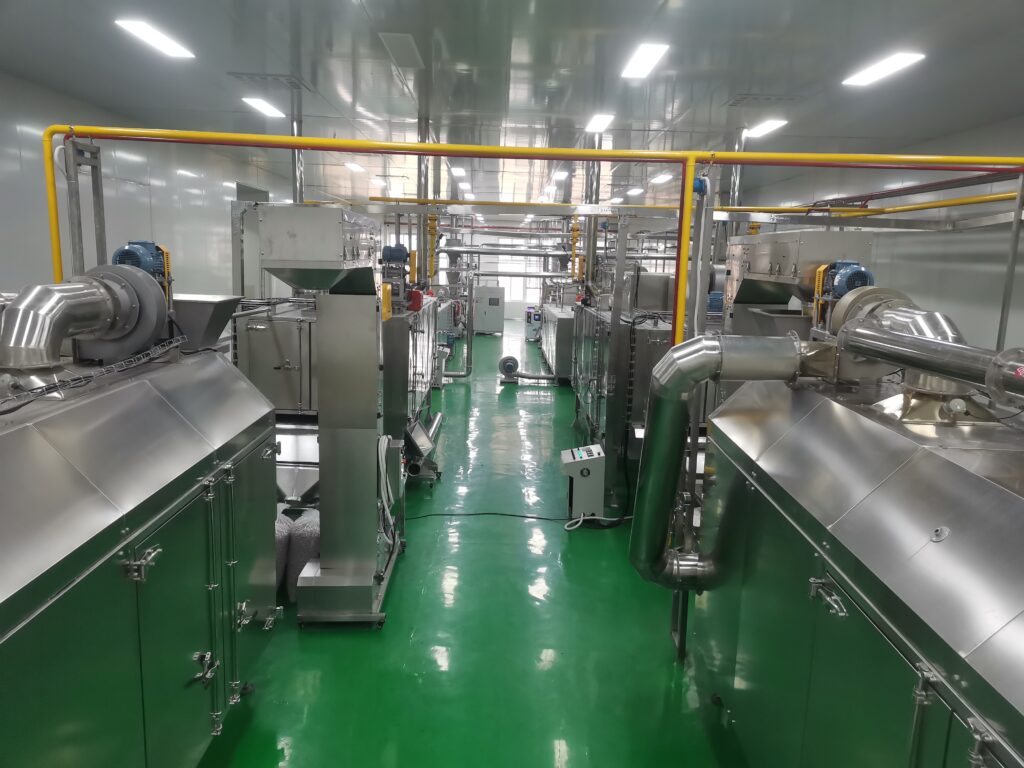
The optimal baking profile must balance competing objectives: removing sufficient moisture without creating structural defects, developing appealing color without burning, and creating crisp texture without excessive fragility. This requires not only proper equipment but also vigilant process monitoring and adjustment based on raw material variations and desired product characteristics.
When executed precisely, baking elevates puffed foods from simple expanded structures to sophisticated snacks with complex flavor profiles, appealing appearance, and satisfying texture—all while ensuring microbial safety and extended shelf stability through proper moisture control.
 Arabic
  English
  Russian
  Spanish
  Italian
  Portuguese
  German
  French
  Japanese
  Moroccan Arabic
  Persian
  Belarusian