
There is a moment of near-universal satisfaction when a well-made puff snack dissolves on the tongue—that ephemeral combination of immediate crunch followed by rapid meltaway that defines premium texture in the extruded snack category. This experience, often taken for granted by consumers, represents one of the most sophisticated achievements in modern food engineering. Achieving truly delicate texture in puffed snacks requires a meticulous orchestration of raw materials, machinery parameters, and post-processing techniques.
Here is how the industry creates that ethereal crunch.
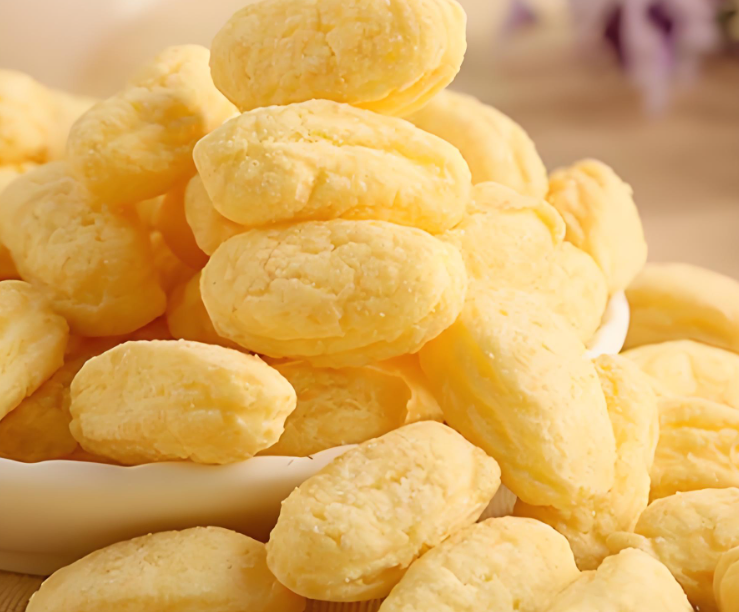
The Foundation: Raw Material Selection
Texture begins not in the extruder, but in the silo. The granularity of the base flour fundamentally determines the ceiling of textural possibility.
For delicate, fine-textured puffs, manufacturers typically select finely ground corn flour rather than coarse grits. Smaller particle sizes create more nucleation sites for bubble formation during expansion, resulting in a more uniform cell structure. This uniformity is critical—uneven cell walls create tough spots that compromise the delicate eating experience.
Some premium manufacturers incorporate specific ratios of modified starches or pre-gelatinized flours into their blends. These ingredients hydrate more readily and create a smoother dough matrix, which translates to thinner cell walls and a more refined crunch. Rice flour, particularly from varieties with specific amylose-to-amylopectin ratios, is sometimes blended with corn to introduce a lighter, crisper bite.
Moisture content of the incoming raw materials must be precisely controlled, typically between 12 and 14 percent. Inconsistent moisture leads to uneven cooking and unpredictable expansion, the enemy of delicate texture.
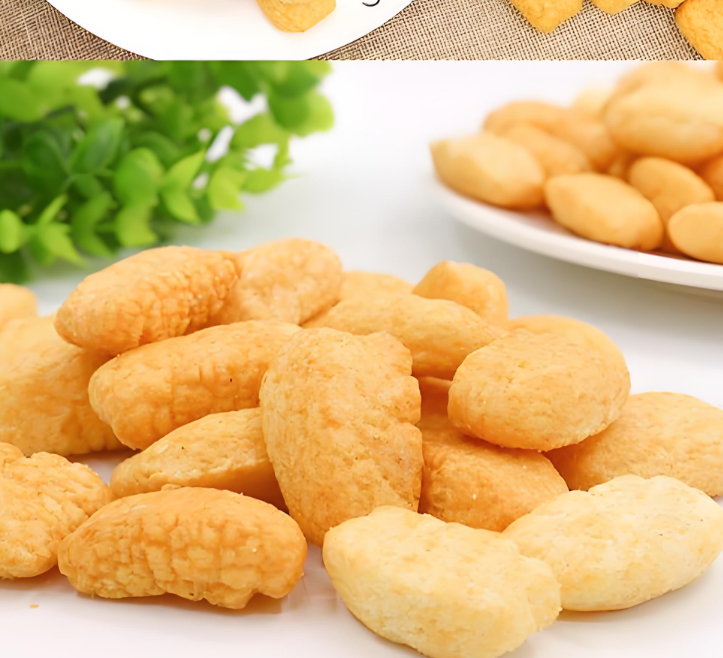
The Pre-conditioning Phase
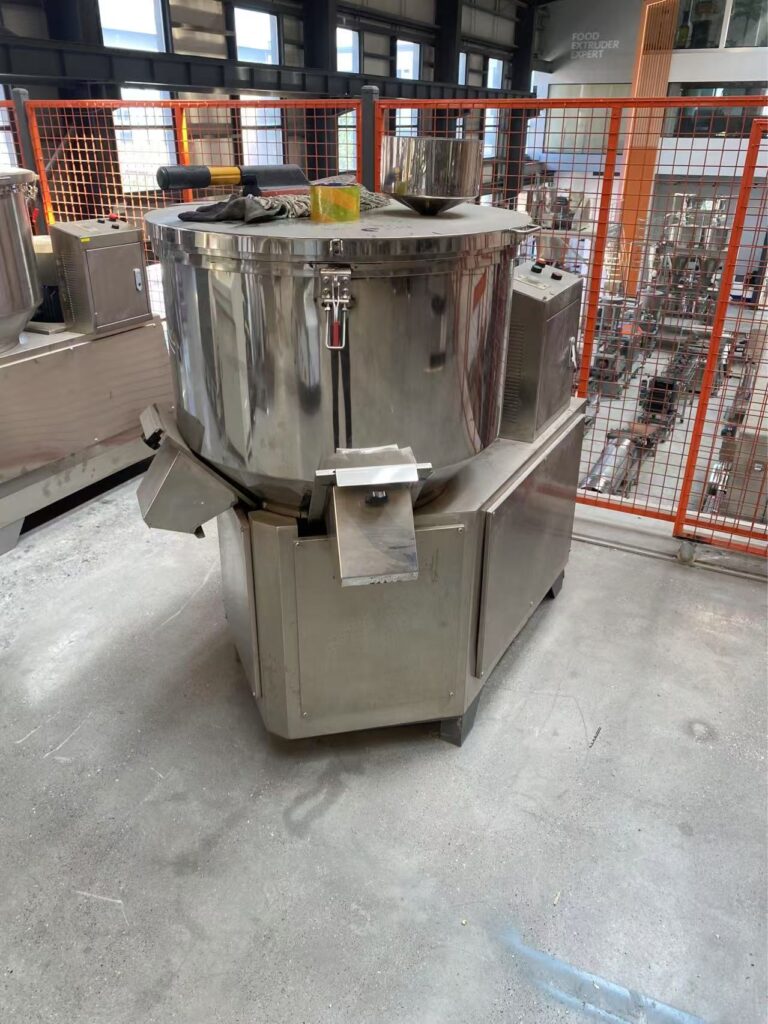
Before the mixture ever reaches the extruder, it passes through a pre-conditioner—a critical step often overlooked in discussions of texture.
In this chamber, steam and water are injected into the dry blend while rotating paddles continuously mix the material. The goal is partial gelatinization of starches before the material enters the extruder barrel. Proper pre-conditioning creates a more uniform dough and reduces mechanical energy requirements later in the process.
For delicate textures, the pre-conditioning must be thorough but not excessive. Under-conditioning leaves raw starch that won’t expand properly; over-conditioning creates a gummy mass that resists the controlled expansion needed for fine bubbles.
The Extruder Parameters: Where Texture Is Born
The twin-screw extruder is the instrument upon which texture is composed, and every variable affects the final result.
Screw Configuration
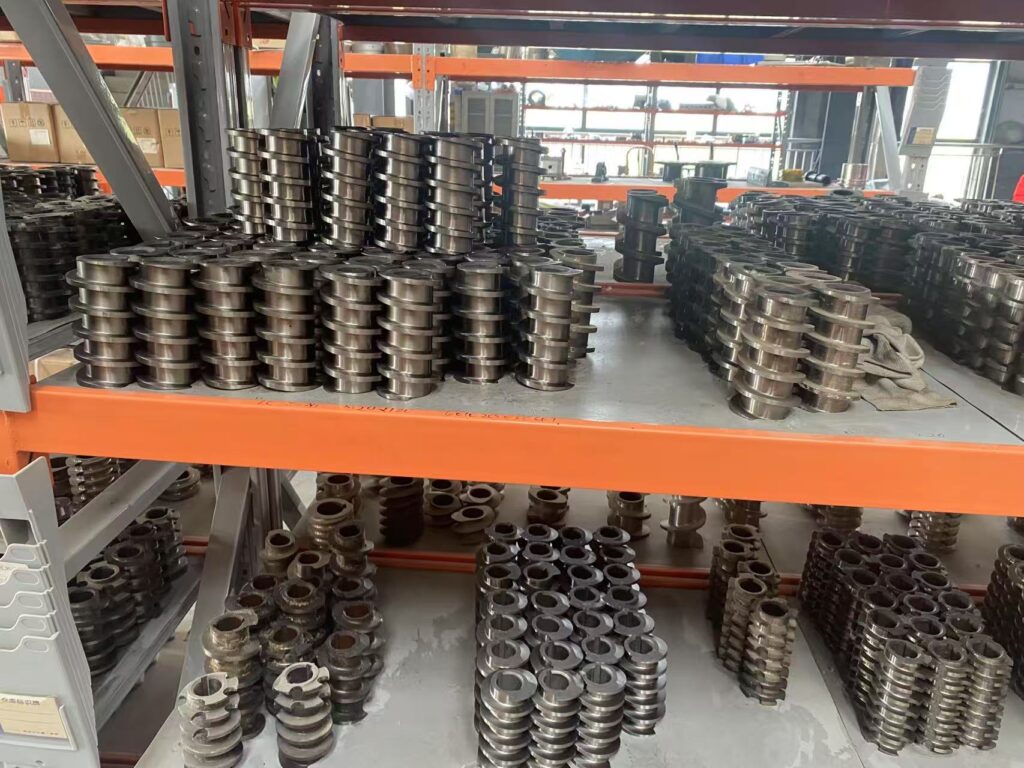
The arrangement of screw elements along the barrel determines how much shear force is applied to the dough. For delicate textures, designers typically use a configuration that gradually builds pressure rather than shocking the material with sudden compression. Gentle kneading elements interspersed with conveying sections allow starches to hydrate and shear gradually, creating a homogeneous melt with minimal degradation.
Too aggressive a screw configuration can tear starch molecules apart, producing a sticky, dense texture. Too gentle, and the expansion will be coarse and uneven.
Temperature Profile
The barrel is divided into zones, each maintained at a specific temperature. For delicate puffed snacks, temperatures typically rise gradually from approximately 60°C (140°F) at the feed zone to 150°C (300°F) or higher at the die.
The key lies in the final zone before the die. Here, the temperature must be high enough to superheat the moisture within the dough but carefully controlled to prevent burning or excessive degradation of starches. The goal is a uniform melt at precisely the right viscosity—too thick, and expansion will be restricted; too thin, and the structure cannot hold the expanding steam.
Moisture in the Barrel
The amount of water injected into the extruder barrel is perhaps the most critical variable for texture. Typical moisture content during extrusion ranges from 14 to 20 percent for direct-expanded snacks.
Higher moisture within this range tends to produce finer, more uniform bubbles because the steam generated during expansion is distributed more evenly throughout the melt. However, there is a tipping point: too much moisture, and the product becomes dense and tough as the expanded structure collapses under its own weight before setting.
Lower moisture creates aggressive, explosive expansion that yields large, irregular bubbles and a coarser texture—think of the difference between a delicate cheese puff and a coarse corn curl.
Die Design
The opening through which the melt exits the extruder shapes more than just the product’s form. Die design influences pressure drop, which drives expansion.
For delicate textures, dies are engineered to create a specific pressure drop rate. Too rapid a drop, and expansion is explosive and uncontrolled. Too gradual, and expansion is incomplete. Some manufacturers use dies with multiple small openings rather than single large ones, creating greater surface area and more uniform expansion.
The temperature of the die itself matters. Heated dies maintain melt temperature through the exit, preventing premature cooling that would inhibit expansion.
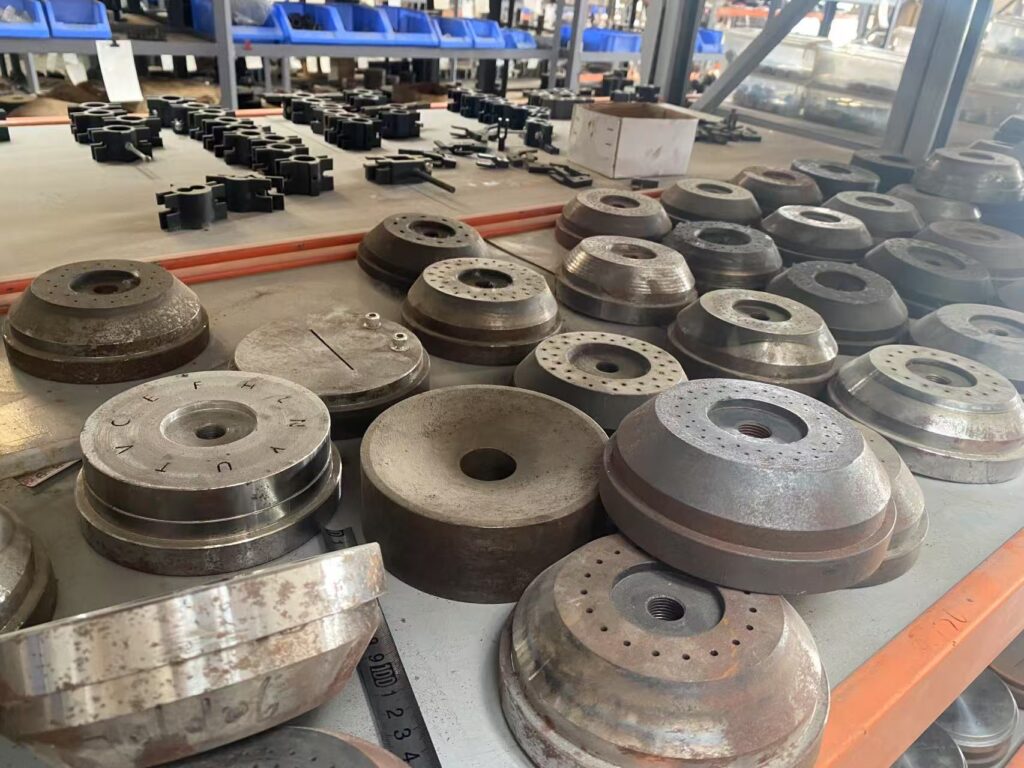
The Expansion Event
When the superheated melt exits the die and hits atmospheric pressure, the entrapped moisture flash-boils into steam, inflating the starch matrix like billions of microscopic balloons. This is where texture is finalized.
The rate of cooling immediately after expansion determines whether the delicate structure sets properly or collapses. Many modern lines incorporate controlled cooling tunnels immediately after the die, using precisely directed air flow to stabilize the expanded matrix before it enters the fryer or oven.
Post-Expansion Processing: Frying Versus Baking
The choice between frying and baking profoundly affects final texture.
Frying immerses the expanded puff in hot oil, which simultaneously cooks the interior and creates a thin, crispy exterior layer. The oil replaces some of the air within the surface cells, contributing to a richer mouthfeel. For delicate textures, oil temperature must be precisely controlled—typically 350-375°F (175-190°C). Too cool, and the product absorbs excess oil, becoming greasy and heavy. Too hot, and the exterior sets before the interior finishes cooking, creating a tough shell.
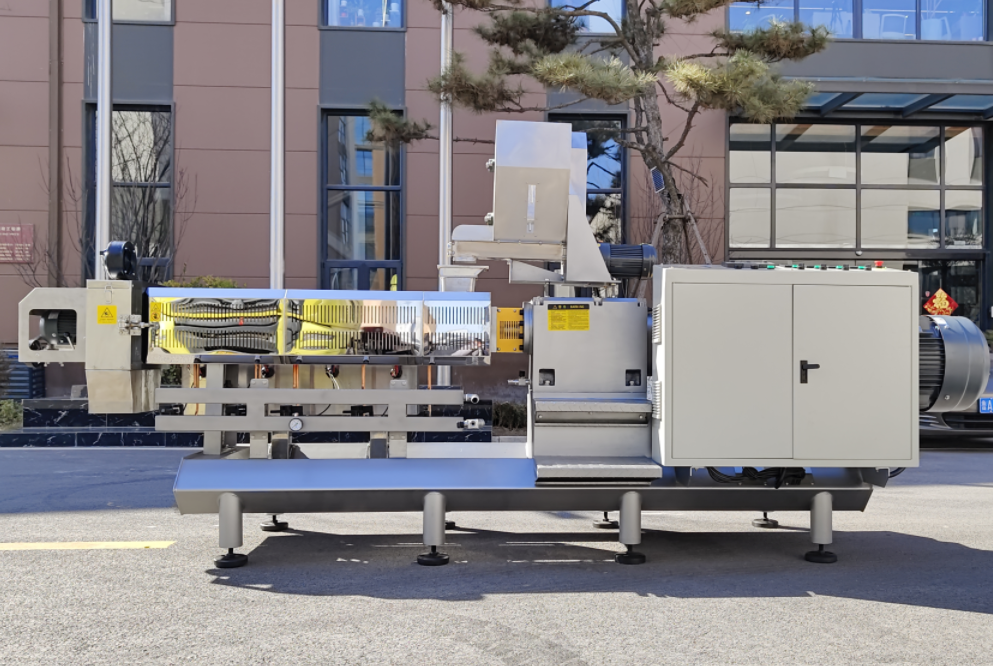
Baking uses hot air rather than oil to complete cooking. Achieving delicate texture with baking is more challenging because air transfers heat less efficiently than oil. Advanced impingement ovens direct high-velocity hot air at the product from multiple angles, attempting to replicate the rapid heat transfer of frying. Baked products typically have a drier mouthfeel and can be tougher if not carefully optimized.
Some manufacturers employ hybrid approaches: a brief flash fry to set the exterior structure, followed by oven finishing to complete drying without excessive oil absorption.
Moisture Management
Final moisture content is the invisible hand that shapes texture perception. For delicate puffed snacks, target moisture typically ranges from 1.5 to 2.5 percent.
Below this range, the product becomes brittle and shatters rather than crunches. Above it, the structure loses crispness and takes on a chewy, stale character. Achieving and maintaining this narrow window requires precise drying control and sophisticated packaging that excludes ambient moisture.
The Seasoning Challenge
Applying flavor without destroying delicate texture is perhaps the most difficult step in production.
Traditional tumble drums, while effective at coating, can cause mechanical damage to fragile puffs. Manufacturers seeking premium texture increasingly turn to specialized application systems that suspend product in an air stream while spraying oil and seasoning, minimizing physical contact.
Oil application itself must be carefully calibrated. Too little, and seasoning won’t adhere; too much, and the product becomes greasy and loses its delicate crunch. The oil must also be selected for its ability to remain fluid at room temperature—oils that solidify create a waxy mouthfeel that masks delicate texture.
Some manufacturers apply seasoning in multiple light passes rather than one heavy coating, building flavor gradually while preserving the integrity of the expanded structure.
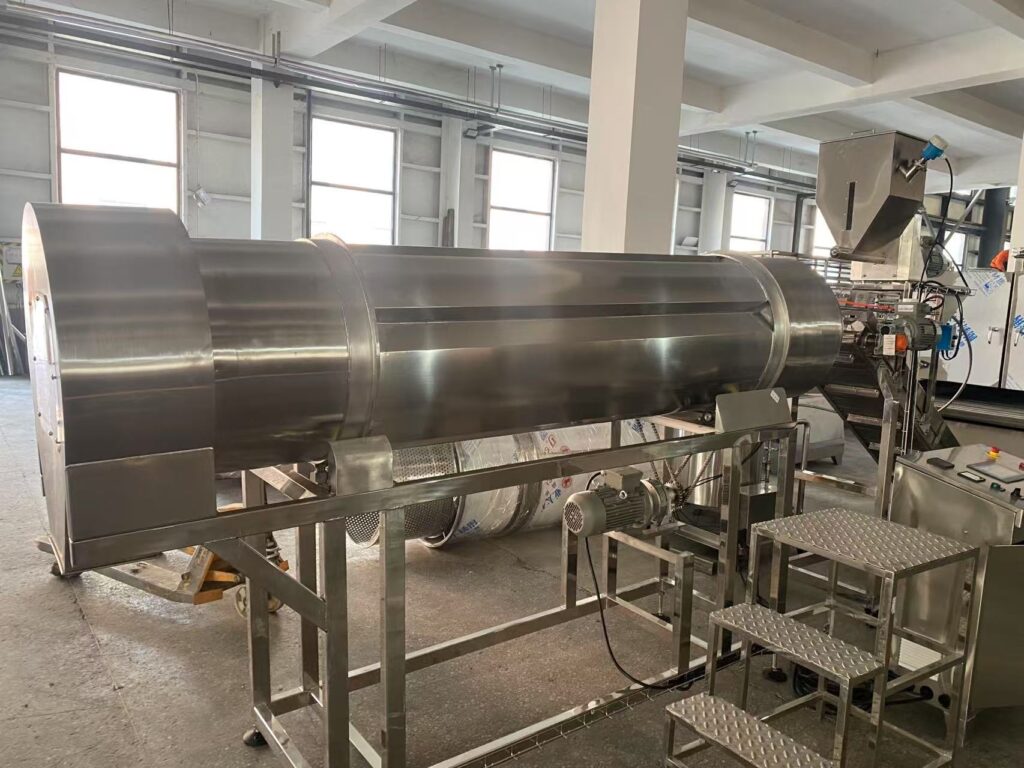
Measuring the Results
Texture is not merely subjective. Food scientists quantify delicate crunch using instrumental analysis.
Texture analyzers equipped with sharp blades or probes measure the force required to penetrate a puff and the pattern of fractures during compression. A delicate product shows numerous small fracture events—the “soundscape” of fine bubbles collapsing—rather than one or two large breaks. Acoustic sensors capture the frequency and intensity of crunch sounds, correlating them with sensory panel perceptions.
These measurements feed back into process control, allowing manufacturers to maintain textural consistency across millions of units.
The Pursuit of Perfection
Creating truly delicate texture in extruded snacks requires the convergence of multiple disciplines: starch chemistry, thermal dynamics, mechanical engineering, and sensory science. Each variable—from the particle size of corn flour to the temperature of the die, from the moisture in the barrel to the air flow in the cooling tunnel—must be optimized in relation to all others.
When it works, the result is that ephemeral moment of pleasure: the immediate, satisfying fracture followed by rapid dissolution, the flavor released evenly across the tongue, the absence of tough fragments or greasy residue. It is, in its way, a small miracle of industrial design—a brief encounter with perfection hidden inside a crinkly bag. If you are interested in the corn puffs machine , you can contact me , i will give you good advice and solutions .
1.Will you help us with the installation ?
Yes , We will send engineers to install and debug the equipment, and assist in training your staff.
2.Are you a factory or trading company?
We are a factory.
3.What certificate do you have?
We have ISO and CE certificate.
4.How long is the warranty period?
All of our machines have one year warranty.
5.What’s the main market of your company?
Our customers all over the world.
6.How much production capacity of your company one year?
This depends on your needs.
 English
  Russian
  Spanish
  Italian
  Arabic
  Portuguese
  German
  French
  Japanese
  Moroccan Arabic
  Persian
  Belarusian