
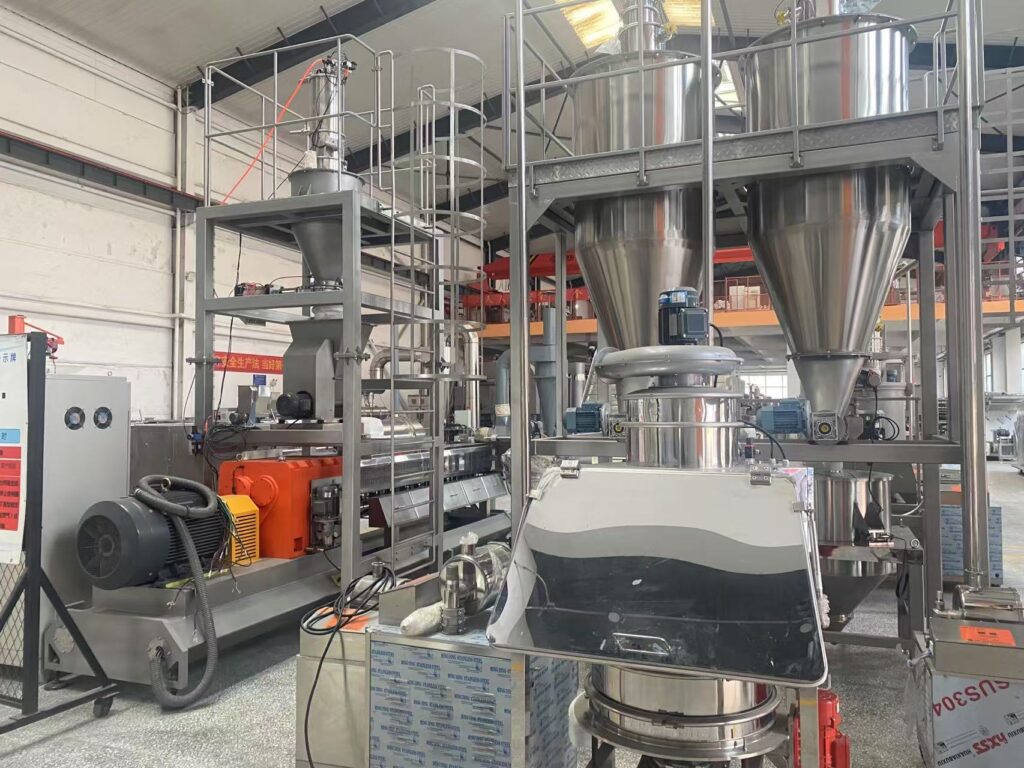
Food extrusion is a high-efficiency process that combines mixing, cooking, shaping, and texturizing in one continuous operation. By controlling moisture, temperature, pressure, and mechanical shear, an extruder can transform simple raw materials—such as grains, starches, and proteins—into products with specific textures, shapes, and functional properties. Because of this flexibility, food extruders are used across many categories, from snacks to pet food and modern plant-based proteins.
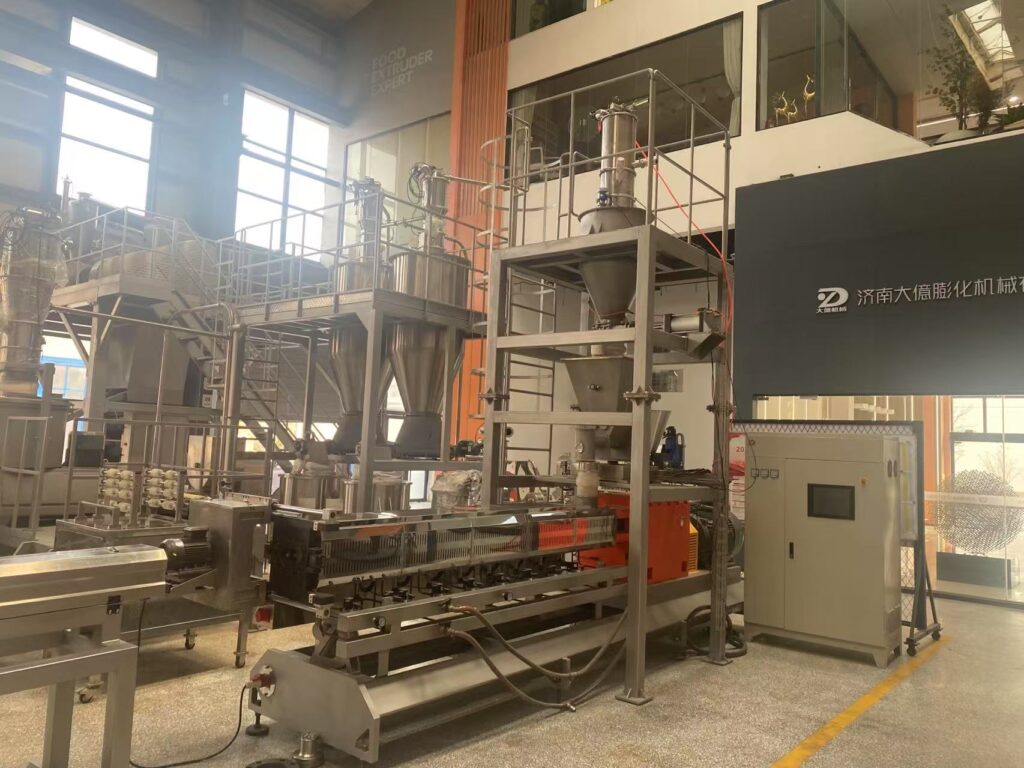
Below is an overview of the major applications of food extrusion and what extrusion contributes in each case.
1) Puffed and Expanded Snacks
One of the most common uses of extrusion is making light, crispy, expanded foods, including:
- corn puffs, cheese curls, and mixed-grain puffs
- extruded snack pellets (later fried or hot-air expanded)
- puffed breakfast snacks and “healthy” grain crisps
What extrusion does: gelatinizes starch and creates rapid expansion at the die exit, producing a porous structure and crunchy texture.
2) Breakfast Cereals
Extrusion is widely used to produce:
- shaped cereals (rings, stars, flakes made from extrudate)
- filled cereals (with later filling steps)
- high-fiber or fortified cereal pieces
What extrusion does: enables uniform cooking, shaping, and incorporation of vitamins/minerals (often added in post-coating if heat-sensitive).
3) Pasta and Noodles (Including Specialty Types)
Extrusion is used for:
- pasta (short shapes, macaroni-style products)
- some instant noodles and specialty noodles
- gluten-free pasta (rice, corn, lentil, pea-based)
What extrusion does: forms consistent shapes with controlled density and cooking behavior; can improve structure in gluten-free formulations.
4) Textured Vegetable Protein (TVP) and Meat Analogues
Extrusion is central to plant-based protein structuring:
- TVP chunks, granules, and mince (often from soy/pea/wheat proteins)
- high-moisture meat analogues (fibrous, meat-like textures)
- hybrid products combining proteins and fibers
What extrusion does: aligns and texturizes proteins under shear and heat to create fibrous structures and chewiness.
5) Confectionery and Snack Bars (Forming and Cooking Components)
Extrusion can be used to produce:
- licorice-type candies
- soft chews and certain gum bases (process-dependent)
- cereal bar inclusions and shaped “crispies”
What extrusion does: provides controlled forming, cooking, and shaping for consistent piece size and texture.
6) Infant and Baby Foods
Extrusion is used for:
- baby cereal powders or quick-cooking granules
- melt-in-mouth snack sticks designed for infants (with careful formulation)
What extrusion does: enables hygienic continuous cooking and produces easily rehydratable, digestible starch matrices.
7) Animal Feed and Pet Food
Extrusion dominates many feed categories:
- floating and sinking aquafeed (fish, shrimp, etc.)
- dry pet food (kibble)
- specialty functional diets (controlled density, high oil inclusion via coating)
What extrusion does: cooks starch/proteins, controls density and buoyancy, improves water stability (aquafeed), and supports post-extrusion fat/vitamin coating.
8) Ingredients: Pregelatinized Starches and Functional Flours
Extrusion is also used to make food ingredients rather than finished consumer products, such as:
- pregelatinized starches (instant thickening)
- extruded flours for improved water absorption or viscosity
- clean-label texturizing bases
What extrusion does: modifies starch and protein functionality, enabling instantization and consistent hydration behavior.
9) Ready-to-Eat and Convenience Foods (Restructuring and Shaping)
Extruders can assist in forming:
- restructured foods from blends (starch + protein + fiber)
- shaped bases for further baking/frying
- controlled-portion pieces with repeatable geometry
What extrusion does: offers continuous forming with consistent weight, shape, and internal structure.
10) Novel and Emerging Applications
As ingredient innovation grows, extrusion is increasingly used for:
- alternative grains and legumes (higher-protein snacks)
- upcycled byproducts (bran, okara, spent grains) turned into snacks or ingredients
- 3D-like shaped products (through advanced dies and downstream forming)
What extrusion does: makes it possible to convert diverse raw materials into stable, shelf-ready formats at industrial scale.
Why Extrusion Is So Widely Used
Across these applications, extrusion is valued because it can:
- combine multiple unit operations in one line (mixing + cooking + shaping)
- deliver consistent, high-throughput production
- precisely control texture (expansion, density, crunch, chew)
- support fortification and functional ingredients
- reduce processing time compared with batch cooking methods
Food extruders are not limited to snack puffs. They are versatile processing tools used to create expanded snacks, breakfast cereals, pasta, plant-based proteins, infant foods, pet foods, and functional ingredients. In many cases, extrusion is the key technology that turns raw agricultural materials into products with specific texture, stability, and consumer appeal.
If you tell me whether you want this article aimed at general readers, food engineering students, or buyers/plant managers, I can adjust the depth (more technical parameters like moisture, SME, die design, and screw configuration, or a simpler market-focused version).
 English
  Russian
  Spanish
  Italian
  Arabic
  Portuguese
  German
  French
  Japanese
  Moroccan Arabic
  Persian
  Belarusian