
Proper cleaning is a critical safety and operational procedure that ensures product quality consistency, prevents microbial growth, eliminates allergen cross-contamination,extruding machines and maintains machine efficiency. Follow this detailed, step-by-step guide for a thorough cleaning process.
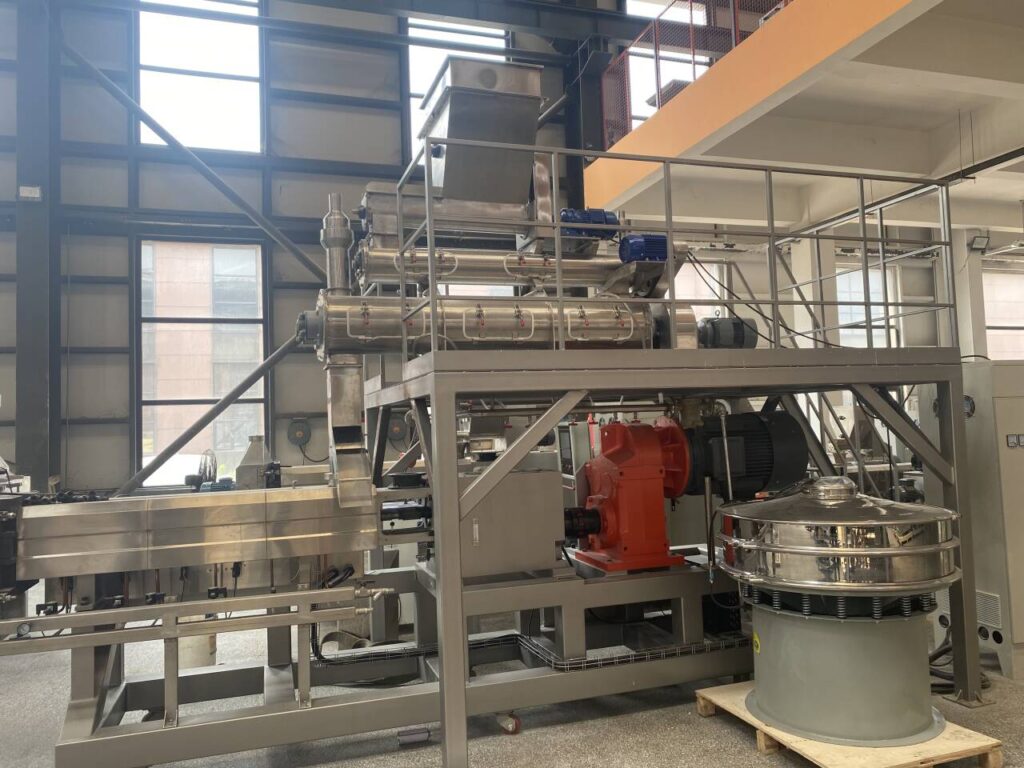
Phase 1: Pre-Cleaning Safety & Preparation
1.1 Safety First – Lock Out, Tag Out (LOTO)
- Complete Shutdown: Follow the full shutdown procedure, extruding machines allowing the machine to cool. Product temperatures must be below 50°C (122°F) before disassembly begins.
- Energy Isolation: Perform LOTO on all energy sources: Main motor power, heater circuits, feeder drives, and any auxiliary systems. Verify isolation.
- Personal Protective Equipment (PPE): Wear heat-resistant gloves, safety goggles, long sleeves, dust masks (for dry cleaning), and steel-toed boots.
1.2 Material & Tool Preparation
- Have ready: Food-grade cleaning brushes (nylon, brass), plastic scrapers, vacuum cleaner rated for fine powder, containers for parts, and appropriate cleaning agents (food-grade alkaline or neutral detergents).
- Clear the surrounding area and lay out a clean, soft surface (like a rubber mat) for disassembled parts.
Phase 2: Systemic Purge & Dry Cleanout
2.1 Pre-Disassembly Purge
- After production, run a purge material (e.g., wheat bran, rice hulls, or a proprietary purge compound) through the system. extruding machines This pushes out most residual product and absorbs oils.
- Continue purging until only the purge material exits the die.
2.2 Feeder & Pre-Conditioner Cleanout
- Empty and vacuum all material from the main feeder hopper, feeder screw, and pre-conditioner.
- Remove access panels and manually brush out all residual powder and dough.
Phase 3: Disassembly Sequence
Always follow the manufacturer’s specific teardown sequence.
- Die Assembly Removal:
- Loosen the end clamp bolts gradually in a cross pattern to release pressure evenly.
- Carefully remove the die head assembly (housing, die plate, cutter assembly). It may still be warm and contain hot, pressurized material—handle with extreme care.
- Screw Removal:
- Using the correct tooling (screw puller/winch), carefully extract the twin screws from the barrel.
- Critical: Place the screws on a dedicated rack or a clean, protected surface. Do not allow the flight tips to impact hard surfaces.
Phase 4: Manual Cleaning of Components
4.1 Screws
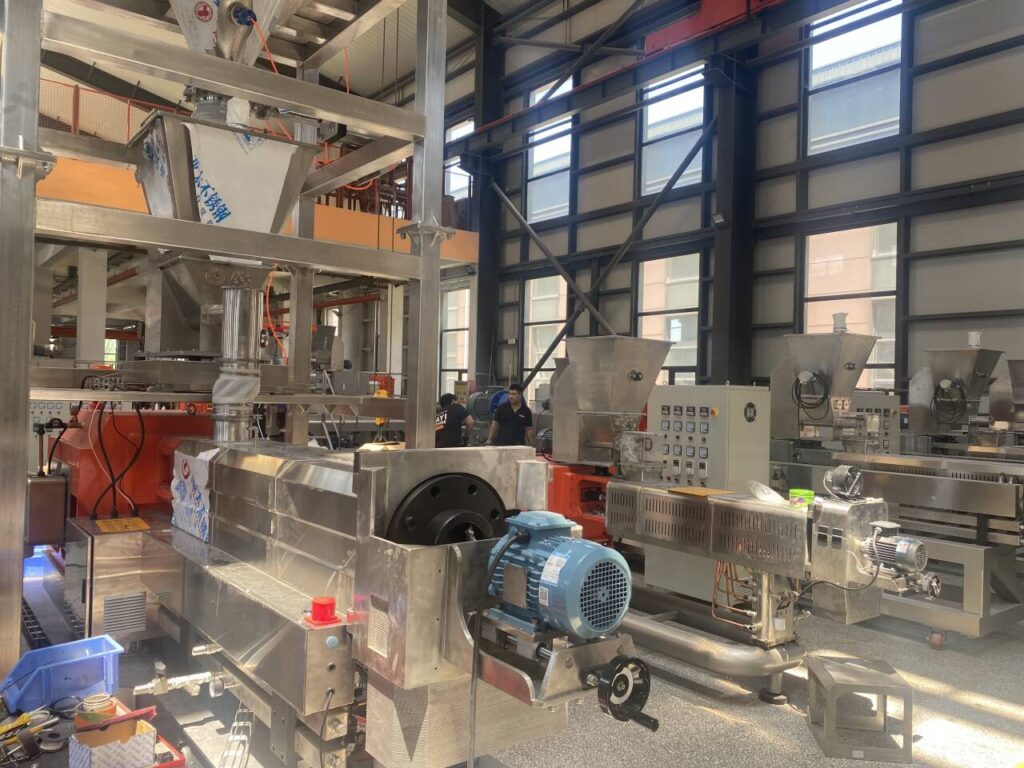
- Use brass scrapers or plastic scrapers to remove all burnt-on or caked-on product. extruding machines NEVER use steel tools as they will scratch and damage the hardened screw surfaces.
- Clean between the screw flights and the root meticulously.
- For stubborn deposits, a controlled application of hot water or a mild detergent solution with a brush is permissible. Dry immediately and completely.
4.2 Die Assembly & Die Plate
- Remove the die plate from the die head. Soak both in warm water to soften product residues.
- Use non-metallic brushes to clean all holes and surfaces. Ensure every die hole is completely clear by visually inspecting for light passage.
- Clean the cutter blades and housing.
4.3 Barrel
- With screws removed, inspect all barrel sections.
- Use long-handled nylon brushes and a vacuum to clean the barrel bores. A lint-free cloth dampened with food-grade alcohol can be used for a final wipe to remove fine dust and oils.
- Important: Never leave the barrel wet. Moisture causes corrosion and, during next startup, can lead to steam explosions.
4.4 Feed Zone & Other Components
- Clean the feed hopper, feed screw, and all chutes.
- Wipe down the exterior of the machine to remove dust and grease.
Phase 5: Inspection & Reassembly
5.1 Critical Inspection
- Wear Check: Inspect screws and barrel liners for excessive wear. Measure the clearance between screw flight tips and barrel wall. Replace components if wear exceeds manufacturer specifications.
- Damage Check: Look for cracks, pitting, or severe scratches on screws, dies, and barrel sections.
- Seal Check: Inspect all gaskets, seals, and wear rings. Replace any that are damaged or worn.
5.2 Reassembly
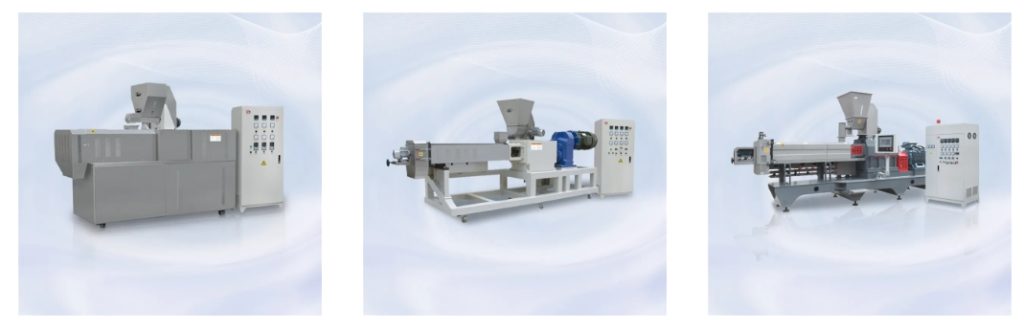
- Apply a thin, food-grade anti-seize lubricant to screw splines and barrel mating surfaces only where specified in the manual.
- Carefully reinsert the screws into the barrel, extruding machines ensuring they are correctly aligned and fully seated.
- Reinstall the die assembly, tightening bolts in a star/cross pattern to the manufacturer’s specified torque to ensure an even, leak-free seal.
- Remove all LOTO devices and tools from the work area.
Phase 6: Sanitization & Post-Cleaning Protocol
- For food/feed applications, after mechanical cleaning, a sanitization step may be required. This can involve flushing the system with steam or a food-grade sanitizer solution, followed by a thorough drying purge (e.g., with dry corn meal).
- Documentation: Record the cleaning in the equipment log, noting the date, time, products run before cleaning, any parts replaced, and the personnel involved.
- Preparation for Next Run: Ensure the machine is dry, reassembled correctly, and ready for the pre-startup checks of the next production run.
Core Principle: An extrusion expander is only as good as its last cleaning. A disciplined, thorough, and documented cleaning procedure is not just maintenance—it is the foundation of product safety, quality, and operational reliability.
 English
  Russian
  Spanish
  Italian
  Arabic
  Portuguese
  German
  French
  Japanese
  Moroccan Arabic
  Persian
  Belarusian